

Most audit reports get read exactly once - the day they're written - and then filed away, unread again until someone needs to prove something happened. That's usually a sign the report wasn't built to be used. It was built to be filed.
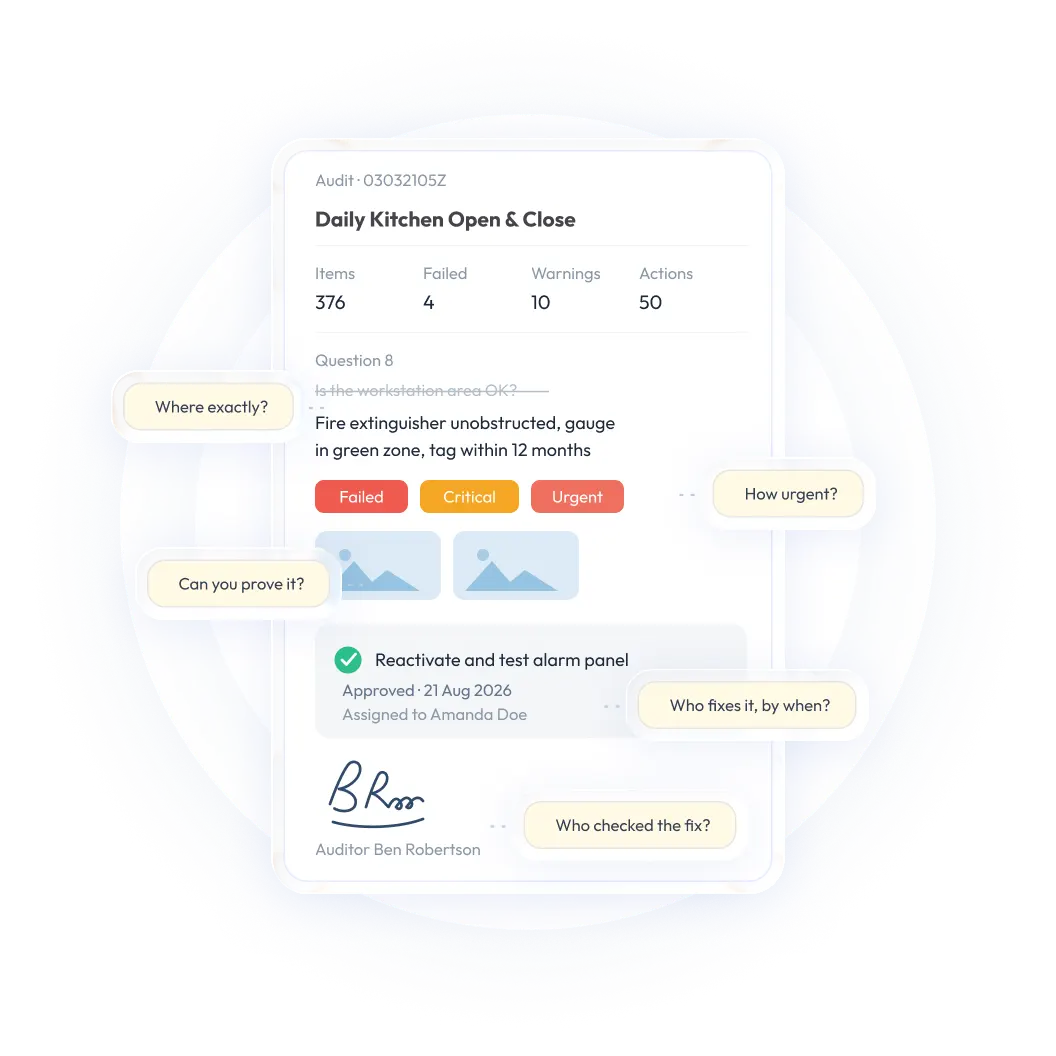
A good audit report does something different: it tells whoever picks it up, 6 days or 6 months later, exactly what was wrong, exactly how bad it was, exactly who's fixing it and exactly when. If any one of those is missing, the report becomes a historical curiosity instead of a working document - interesting, maybe, but useless for actually driving a fix.
This guide covers what to include in an audit report if the goal is action, not archiving - the specific elements that turn a report from a compliance formality into a document people actually rely on. At the end, there's a free, practical audit report template built around exactly this structure, ready to adapt to your own inspections and audits.
The real test of a good audit report
Before the checklist of sections, it's worth naming the standard a report should be held to: could someone who wasn't there - a new manager, a regional director, an auditor reviewing your history a year later - read this report and know exactly what to do next, without having to call anyone for context?
If the answer is no, the report is missing something structural, not just missing polish. Vague language (‘housekeeping needs attention’), missing ownership (‘someone should look at this’), or absent deadlines (‘to be addressed’) are the most common reasons a technically complete report still fails this test.
<<cta>>
Element 1: A clear, specific finding - not a vague impression
The finding is the foundation everything else builds on and it's also the part most likely to get written poorly under time pressure.
Weak: ‘Housekeeping issue in the warehouse.’ Strong: ‘Pallets stacked above the marked height limit in Bay 4, blocking sprinkler clearance by approximately two feet.’
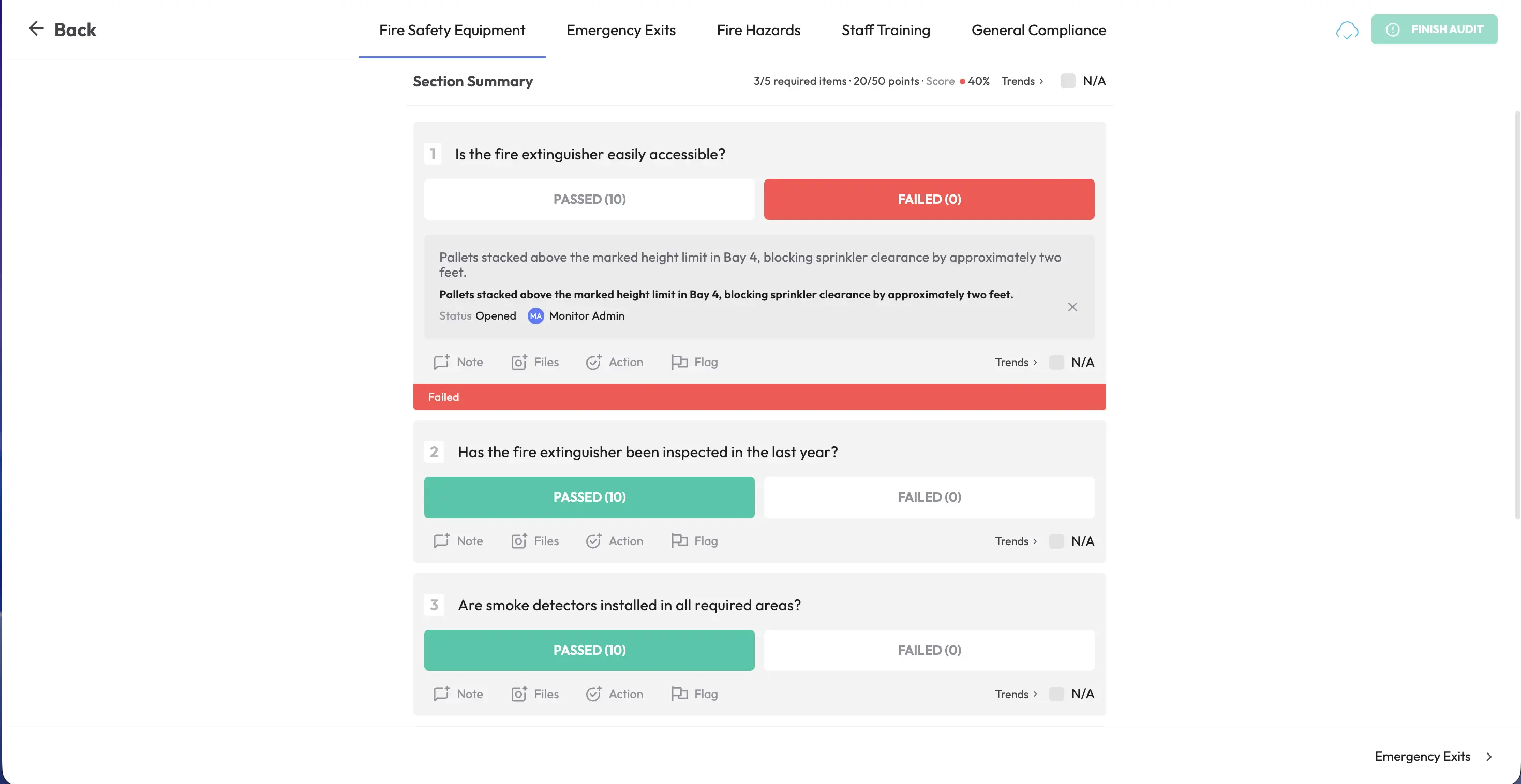
The difference isn't length; it's specificity. A strong finding names the exact location, the exact condition observed and why it matters so the next reader understands both what was wrong and how serious it is without needing to have been standing there. Vague findings are the single biggest reason audit reports fail to drive action: nobody can act decisively on ‘needs improvement.’
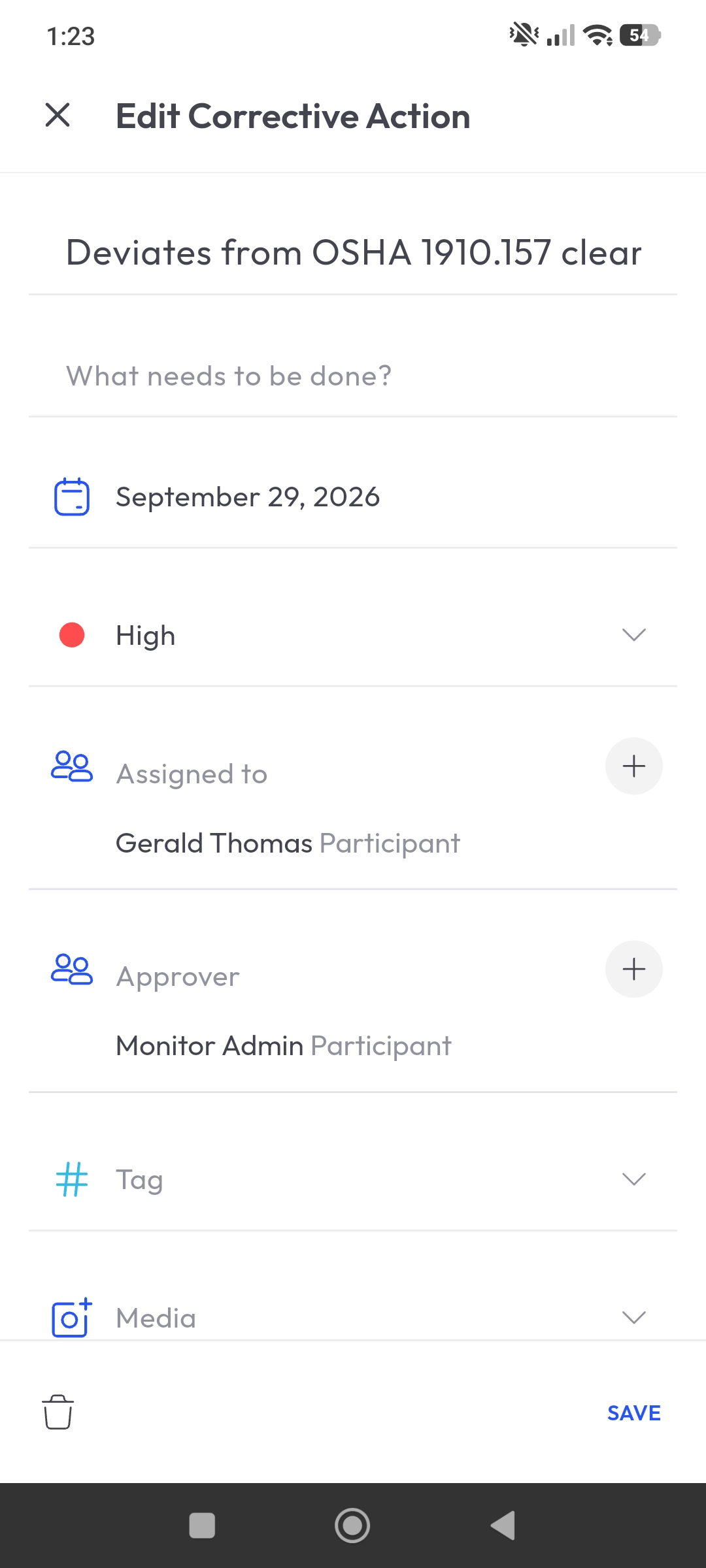
Each finding should also reference what it's being measured against - the specific standard, checklist item or requirement it violates - so there's no ambiguity about whether this is a genuine issue or a judgment call. ‘Deviates from OSHA 1910.157 clearance requirements’ carries more weight and leaves less room for dispute, than ‘doesn't look right.’
Element 2: Supporting evidence - photos, not just descriptions
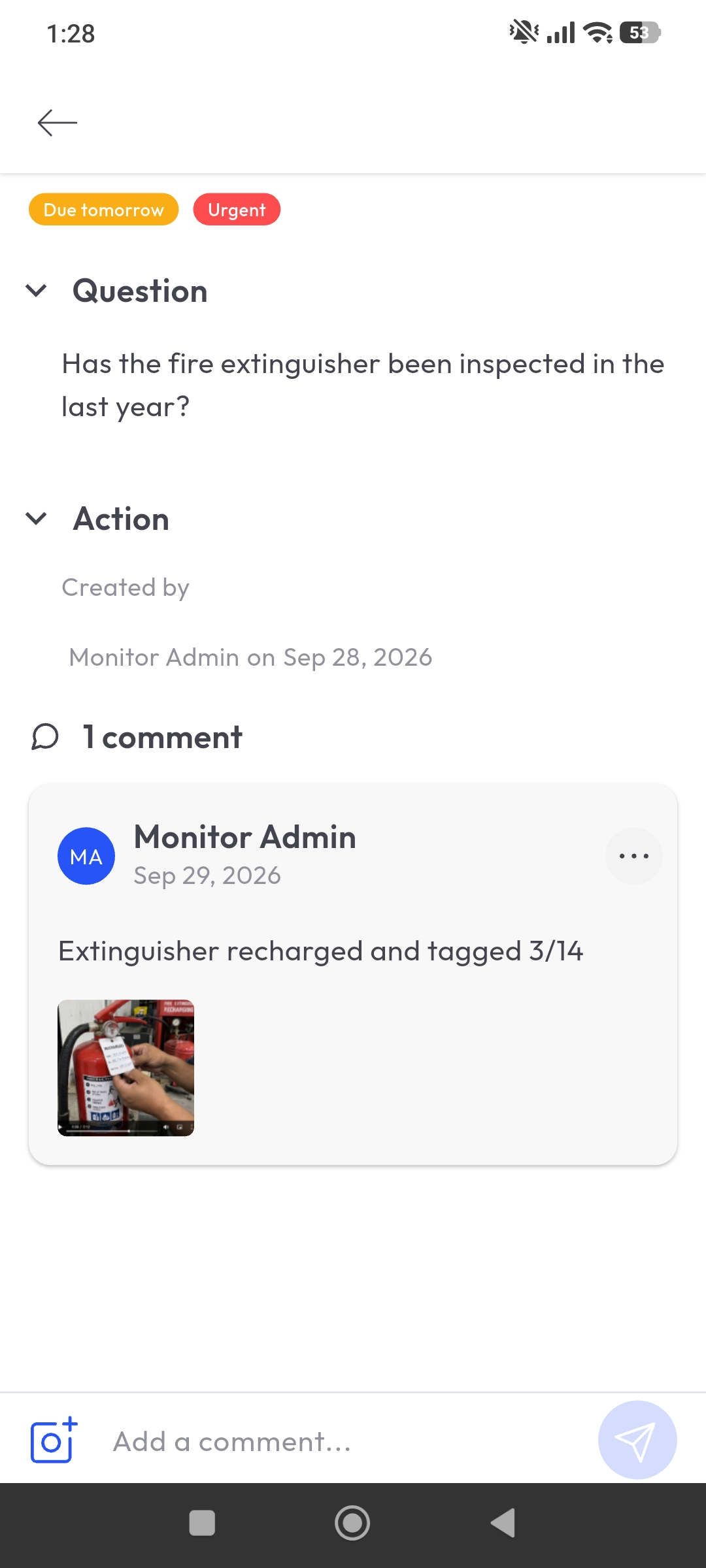
Text alone leaves room for interpretation. A photo removes it. ‘Fire extinguisher inspection tag expired’ is a claim; a photo of the tag showing the actual expiration date is proof and proof is what holds up when a finding gets questioned later, whether by the person responsible for the fix or by an external auditor reviewing the record.
Good evidence practice means capturing the photo at the time of the finding, not reconstructing it afterward from memory and making sure it's clearly linked to the specific finding it supports rather than dropped into a general appendix where the connection has to be guessed at. Where relevant, include measurements, tag dates or other objective details visible in the frame; the more the photo can stand on its own without narration, the stronger the record.
Element 3: Severity and priority - not every finding is equal
A report that treats an expired extinguisher tag and a completely blocked emergency exit with the same visual weight and the same due date is a report that's failed to do the most basic job of triage.
Every finding needs a severity rating - critical, major, minor or whatever scale your organization uses - assigned at the time of inspection, not reconstructed later from memory. Critical findings should be visually distinct in the report itself, not buried in the same font and formatting as routine housekeeping notes. This is what lets a reader scan a report and immediately know what needs attention today versus what can wait for the next routine cycle.
Element 4: A named, responsible owner
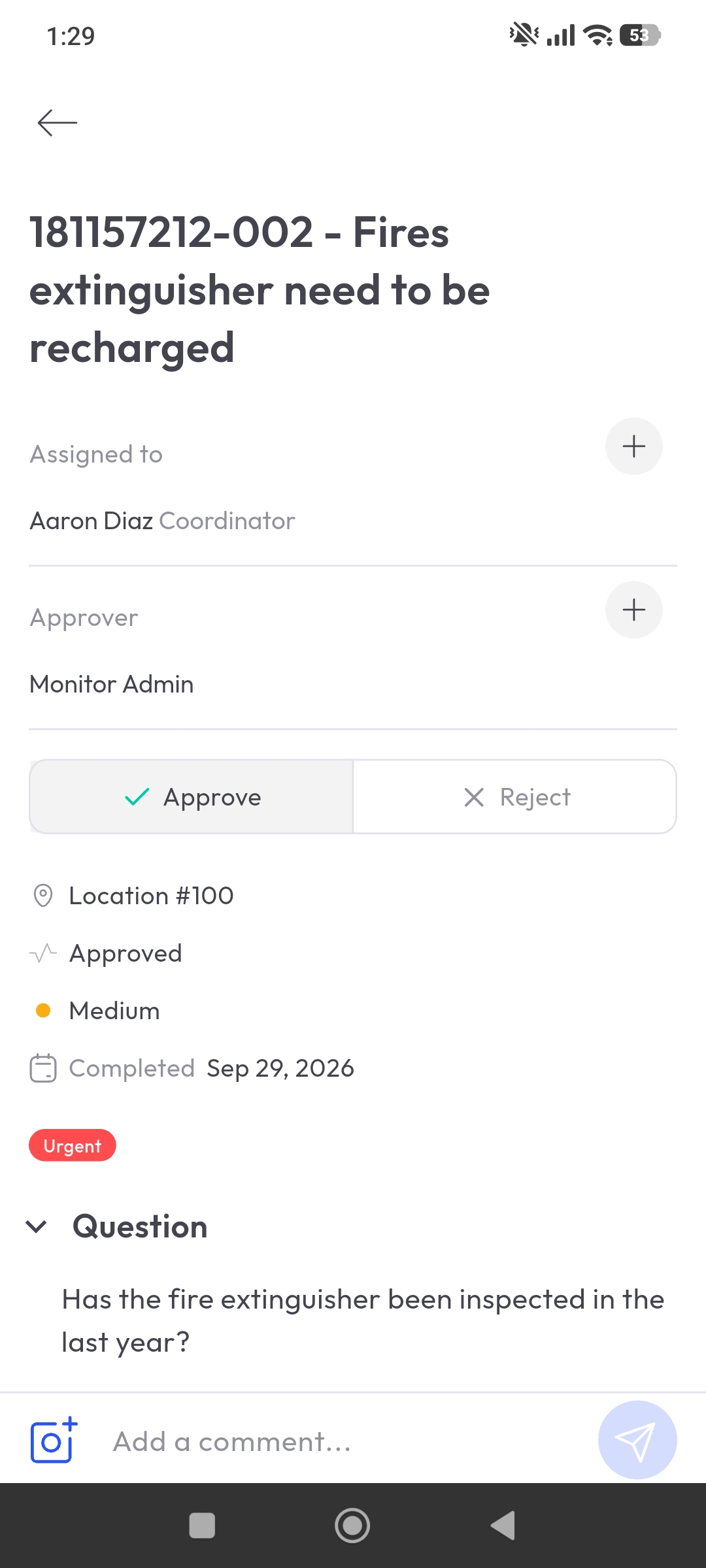
‘To be addressed by the team’ resolves nothing because a team isn't a person and a person is what accountability requires. Every finding needs an owner - a specific name, not a department or a role in the abstract.
This matters more than it might seem because assigning a name is what converts a finding from a documented observation into an active task someone is actually responsible for. It also creates a natural point of follow-up: if the finding isn't resolved by the deadline, there's exactly one person to check with, not an ambiguous group where everyone assumes someone else has it covered.
Element 5: A deadline based on severity, not convenience
Every corrective action needs a due date and that date should be driven by how serious the finding is, not by whatever's administratively easiest to schedule. A critical hazard needs a same-day or next-day deadline. A minor housekeeping note can reasonably wait for the next routine cycle.
Reports that assign every finding the same generic ‘30 days’ deadline regardless of severity are quietly training everyone who reads them to treat urgency as decorative rather than real. The deadline is part of what tells the reader how seriously to take the finding; treat it accordingly.
<<cta>>
Element 6: Documented corrective action - what was actually done
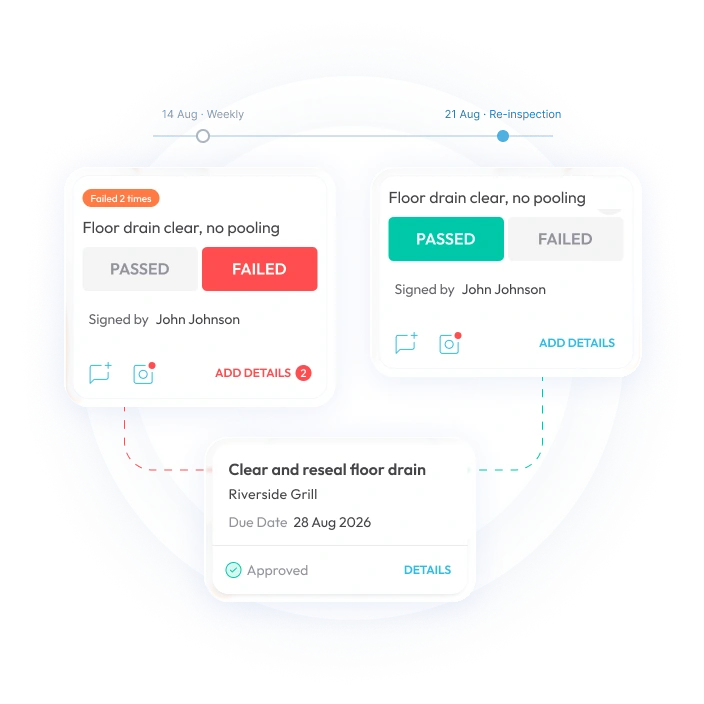
The report shouldn't end at ‘here's what's wrong.’ A complete report includes space to document what was actually done in response - not just that a task was marked complete but a specific description of the fix, ideally with a follow-up photo showing the resolved condition.
This is what separates a report that proves something got fixed from one that merely claims it did. ‘Resolved’ with no detail is a claim. ‘Extinguisher recharged and tagged 3/14, photo attached’ is evidence and it's the evidence that holds up if the same area gets audited again later and someone wants to confirm the prior issue didn't quietly recur.
Element 7: Sign-off - verification, not just completion
This is the element most reports skip entirely and it's arguably the most important one for actually closing the loop. Marking a corrective action ‘complete’ and having someone independently verify that the fix actually holds are two different things and conflating them is exactly how the same issue ends up recurring on the next audit.
A good report includes a distinct sign-off section - separate from the ‘task marked done’ step - where a supervisor or the original inspector confirms the fix was checked and genuinely resolves the finding, with their name and the date attached. This closing signature is what gives the report its final credibility: not just ‘someone said this was fixed,’ but ‘someone verified it.’
How clear reporting actually drives action
Every element above serves the same underlying goal: removing the ambiguity that lets a finding quietly stall. A vague finding gets deprioritized because nobody's sure how serious it really is. An unowned finding gets deprioritized because nobody feels personally responsible for it. An undated finding gets deprioritized because there's no moment at which it becomes overdue. A report built with every element above removes each of those escape routes, one at a time.
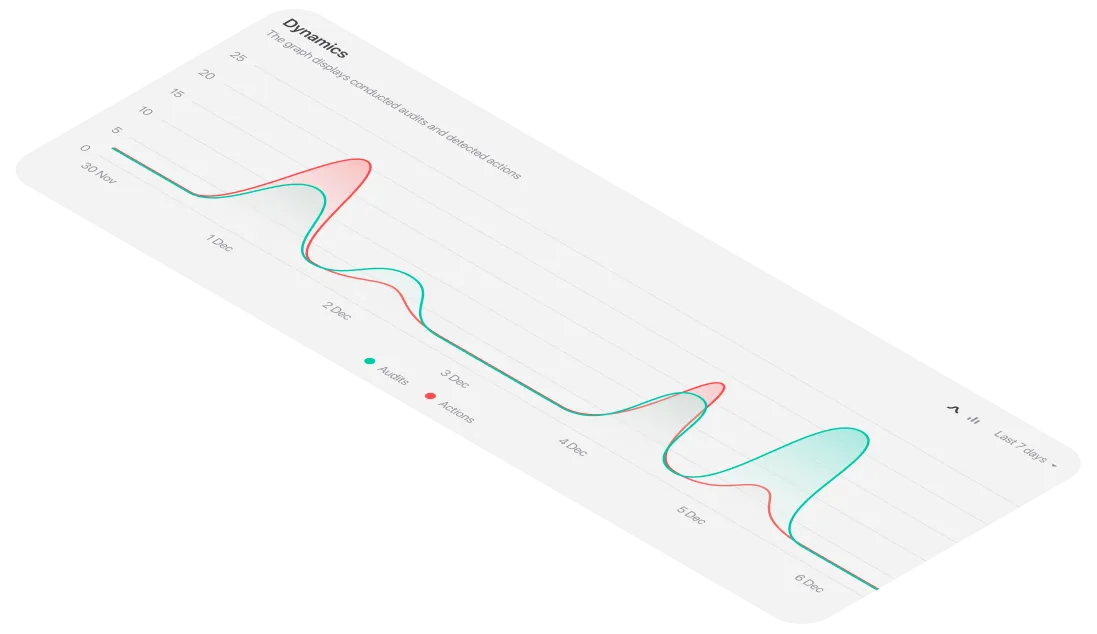
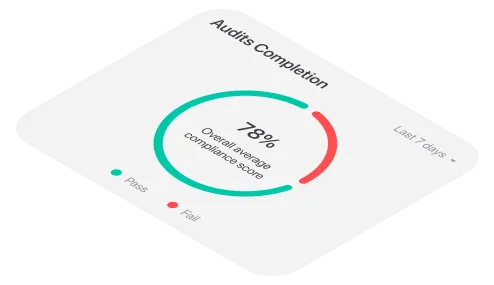
This is also where the value of a report compounds over time, not just in the moment it's written. A single well-structured report helps one team fix one issue. A consistent structure applied across every audit, every site, every quarter is what lets you see patterns - the same finding recurring in the same area, a particular location's completion rate trailing others, a severity category trending upward before it becomes a real incident. None of that pattern recognition is possible if every report is structured differently or if reports live scattered across formats with no way to compare them side by side.
This is exactly the shift that happens when reporting moves into a connected system rather than staying a collection of individual documents. monitorQA's insights and reporting feature built around this idea directly - every finding, photo, severity rating and corrective action captured at the point of inspection feeds into reporting that shows not just one report in isolation but trends across sites, teams and time so patterns that would be invisible in a stack of individual documents become obvious on a dashboard.
<<cta>>
Free audit report template
To make this practical, we've built a downloadable audit report template structured around every element covered above - finding description, evidence, severity rating, standard reference, assigned owner, deadline, corrective action documentation and a formal sign-off section.
Download the Audit Report Template (Word doc)
Use it as-is for a single audit or adapt the finding categories and severity scale to match your own industry and risk profile. The structure is what matters most - keep every element, even if you rename the specific fields to fit your context.
Common mistakes that undermine a report's usefulness
Combining multiple issues into one finding. ‘Housekeeping and PPE compliance need improvement’ hides two separate problems behind one vague statement and makes it impossible to assign a single clear owner or track either issue independently.
Writing findings after the fact, from memory. Details fade fast - the exact location, the specific severity, the precise wording of what was observed. Document findings in real time, on the floor, not reconstructed at a desk hours later.
Treating the report as the finish line. A report that ends at ‘finding documented’ without a tracked path to a verified fix has done half the job. The report should be a living document until every corrective action is both completed and signed off.
Inconsistent structure across reports. If every inspector formats findings differently, comparing reports over time - and spotting real patterns - becomes far harder than it needs to be. Consistency is what makes a body of reports collectively useful, not just individually complete.