

There's a particular kind of dread that comes with a surprise health inspection. Not because the kitchen is dirty, usually it isn't, but because nobody can say with certainty whether last Tuesday's cooler log actually got filled in, or whether the new prep cook was ever shown the allergen procedure, or where that clipboard even is right now. The restaurant is probably fine. ‘Probably’ is not a word that holds up well in front of an inspector.
This is the quiet failure mode behind most health code violations: it's rarely one dramatic lapse. It's a small, boring gap - a missed temperature check, an unlogged cleaning task, a corrective action that got mentioned in a pre-shift huddle and then evaporated, that happens to land on the wrong day. If you're researching how digital checklists reduce health code violations, this is exactly the mechanism worth understanding, because it's not about digital checklists being smarter than paper. It's about them closing the specific gaps where paper quietly fails.
Below is a real comparison of paper and digital workflows, the compliance gaps that show up most often in restaurants and what actually changes when food safety software replaces the clipboard.
Why paper checklists fail restaurants specifically
A paper checklist isn't inherently unreliable - for a single location with a stable, experienced team, it can work fine for years. The trouble is that restaurants are rarely stable environments. High turnover, tight shift changes, multiple locations and constant time pressure are exactly the conditions the paper handles worst.
Completion depends entirely on individual discipline. A cook rushing through close can fill in a temperature log from memory instead of actually checking the walk-in and there's no built-in way to catch that. This isn't a character flaw; it's what happens when a system relies on nobody ever being tired, rushed or distracted.
Records live in one physical place, until they don't. A clipboard can get grease on it, go home in someone's bag or simply not make it from the line to the office. When an inspector asks for the last 90 days of cooling logs, ‘we have them somewhere’ is not a good answer and it's a common one on paper systems.
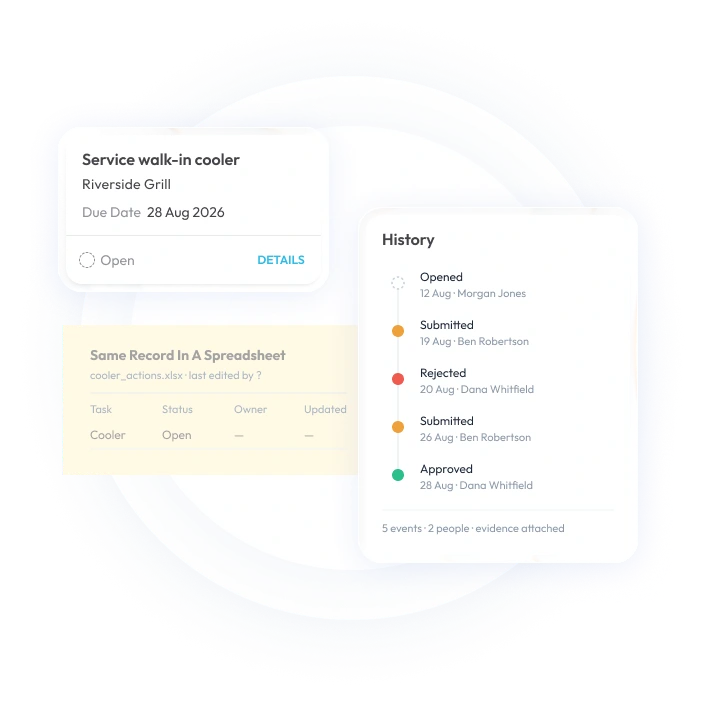
Follow-up has no enforcement mechanism. A manager notices the hand sink is low on soap, writes it down, and... then what? Paper can record a problem. It can't remind anyone the next day that the problem still exists or flag it as overdue or escalate it if it's still unresolved a week later.
Consistency breaks down across shifts and locations. The opening checklist a Tuesday-morning manager runs might look nothing like what a Saturday-night manager actually does, even if they're using the same printed form because paper can't enforce that every item actually gets checked, only that the paper gets signed.
None of these are staff failures. They're structural weaknesses in a system that depends on human memory and physical logistics working perfectly, shift after shift, indefinitely.
<<cta>>
The compliance gaps that trigger the most violations
Health inspectors consistently flag the same handful of issues and nearly all of them trace back to one of the paper weaknesses above rather than to actual negligence.
Temperature control lapses. Cold holding above 41°F, hot holding below 135°F - these are among the most cited violations anywhere and they usually happen not because staff don't know the rule but because the log wasn't checked at the right interval or was filled in after the fact from a guess.
Undocumented cleaning and sanitation. A surface that was cleaned but never logged looks, to an inspector, exactly like a surface that was never cleaned at all. Paper's inability to prove a task happened is as damaging as the task actually being skipped.
Inconsistent staff hygiene practices. Handwashing frequency, glove changes and illness reporting are hard to audit after the fact on paper; there's no record of what actually happened at 2pm on a Wednesday, only what someone remembers when asked days later.
Pest control gaps. Missed inspection intervals or unaddressed signs of activity often trace back to a corrective action that got noted but never verified as resolved - the same follow-up failure that shows up across nearly every violation category.
Cross-contamination risks. Improper storage order in a walk-in, shared equipment between raw and ready-to-eat items - these are often caught during routine self-checks but only if those self-checks are actually happening consistently, on every shift, not just when someone remembers.
Notice the pattern: almost none of these are knowledge gaps. Staff generally know the rules. What breaks down is proof, consistency, and follow-through - precisely what a paper-based process can't structurally guarantee.
We've covered these specific violations and how to prevent each one in more depth in our guide to common health code violations - worth a read if you want the full breakdown by category.
What changes with digital checklists
A digital checklist isn't just a paper form on a screen. Done well, it restructures the process so the weak points above stop being optional.
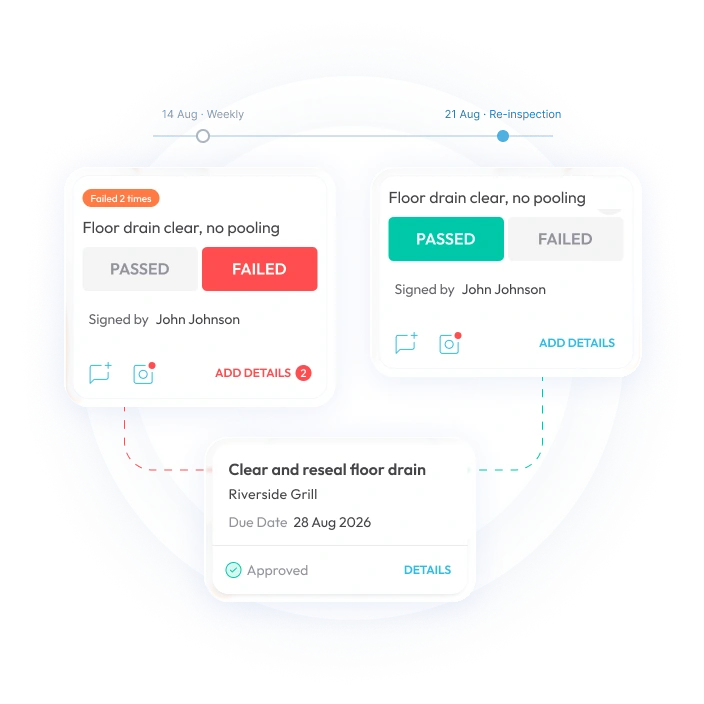
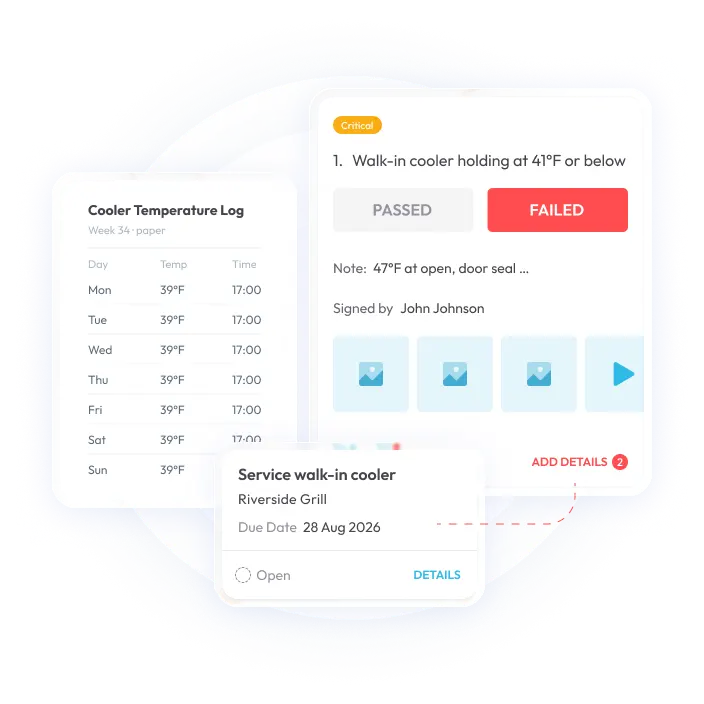
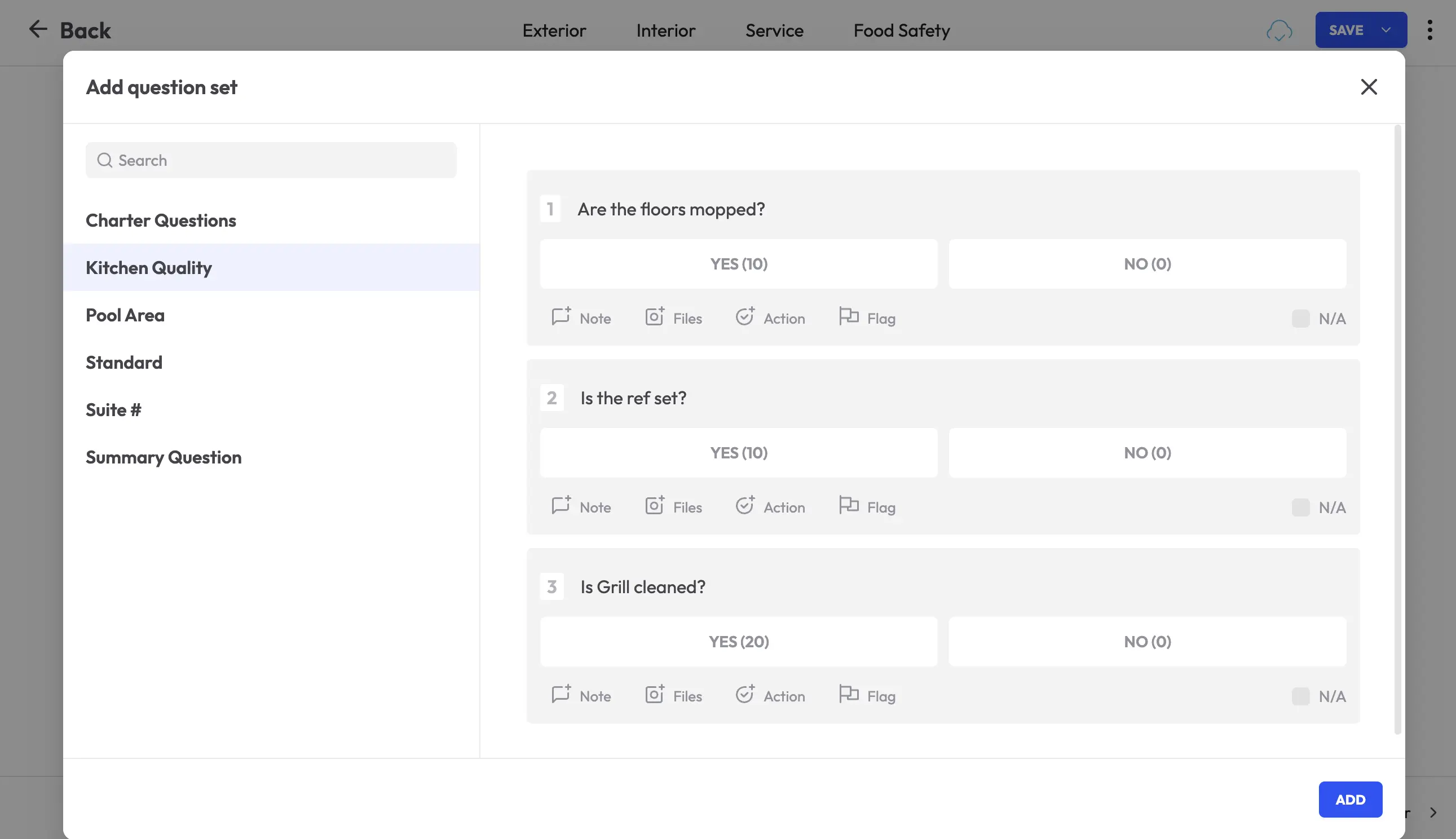
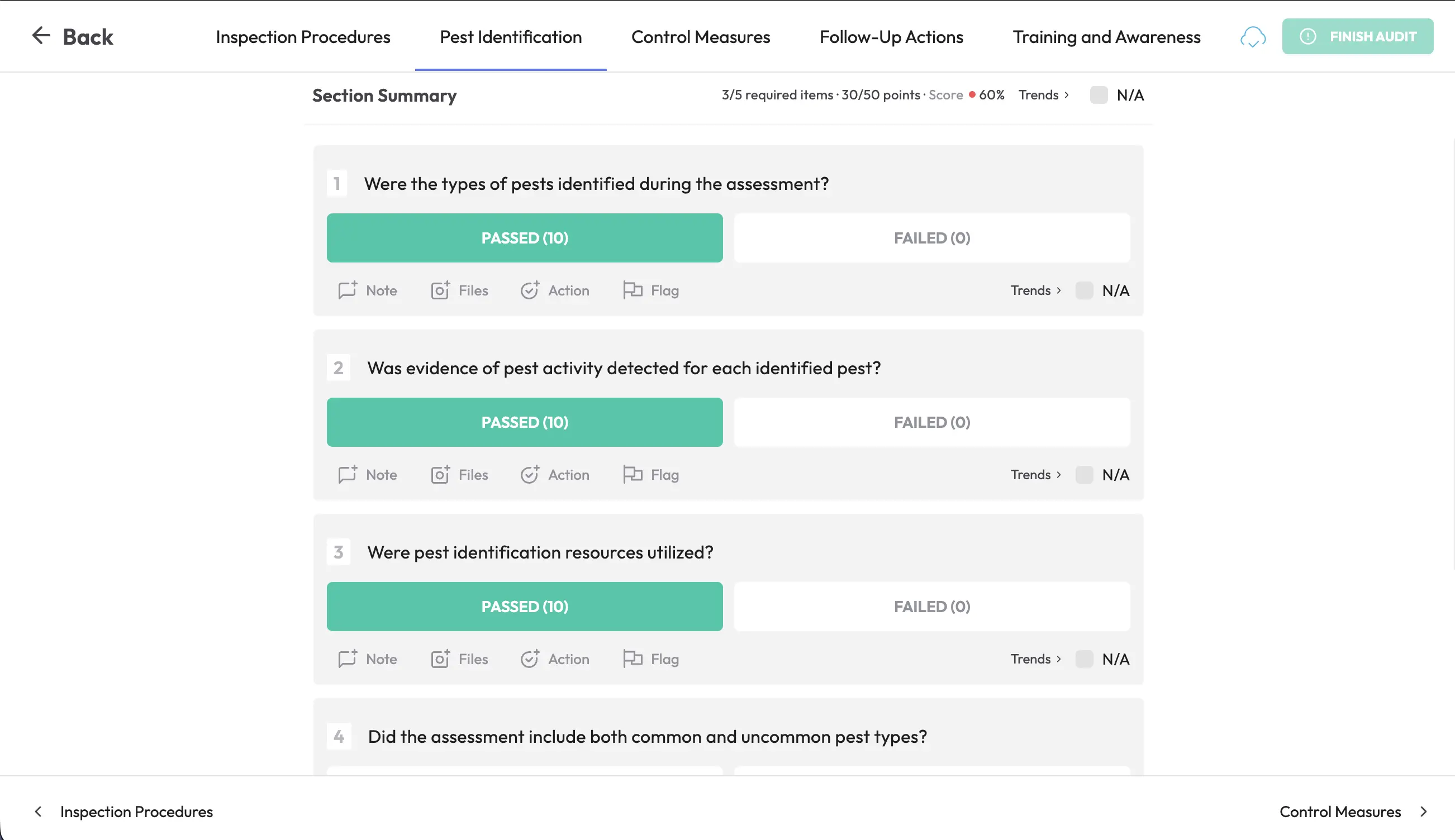
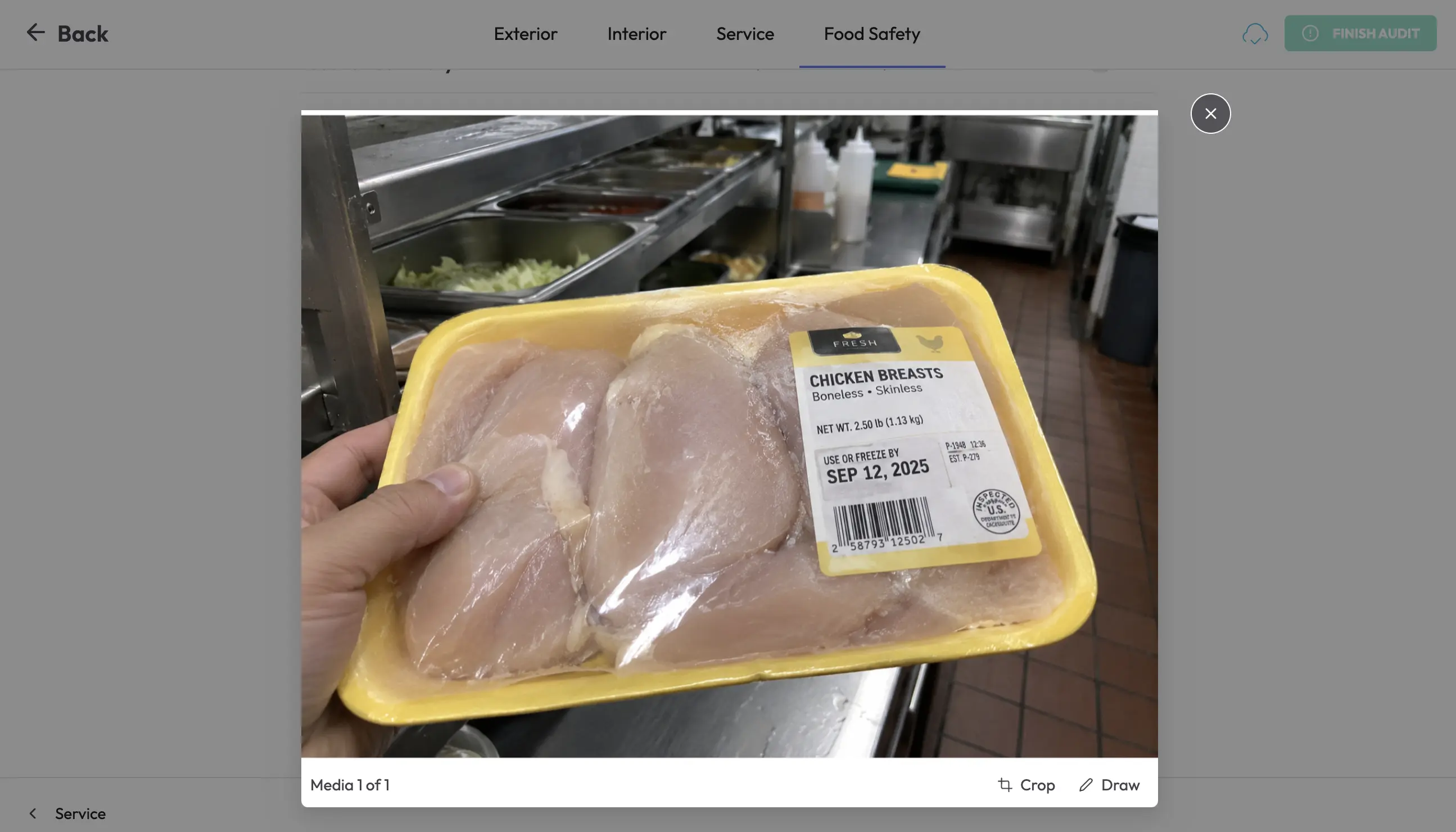
Tasks can require proof, not just a checkmark. A digital cleaning checklist can require a photo before it lets a staff member mark a task complete, which makes ‘I did it, I just didn't write it down’ and ‘I didn't actually do it’ functionally the same non-option. Temperature logs can be time-stamped automatically the moment they're entered, removing the ‘filled in from memory at the end of shift’ problem entirely.
Records exist the moment they're created and they can't get left in someone's car. Every entry is stored centrally and immediately, which means if an inspector asks for 90 days of records, the answer is a few taps, not a search through binders in the back office.
<<cta>>
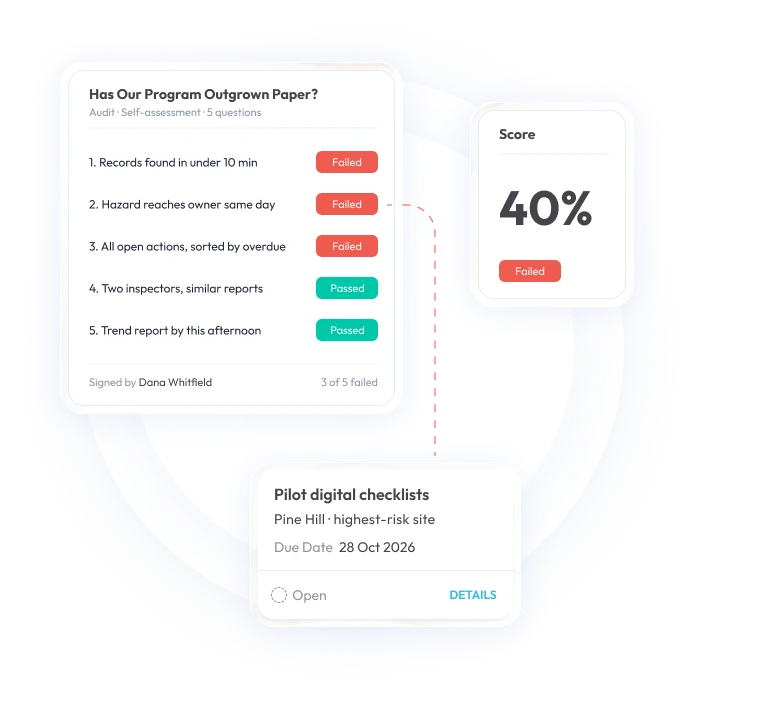
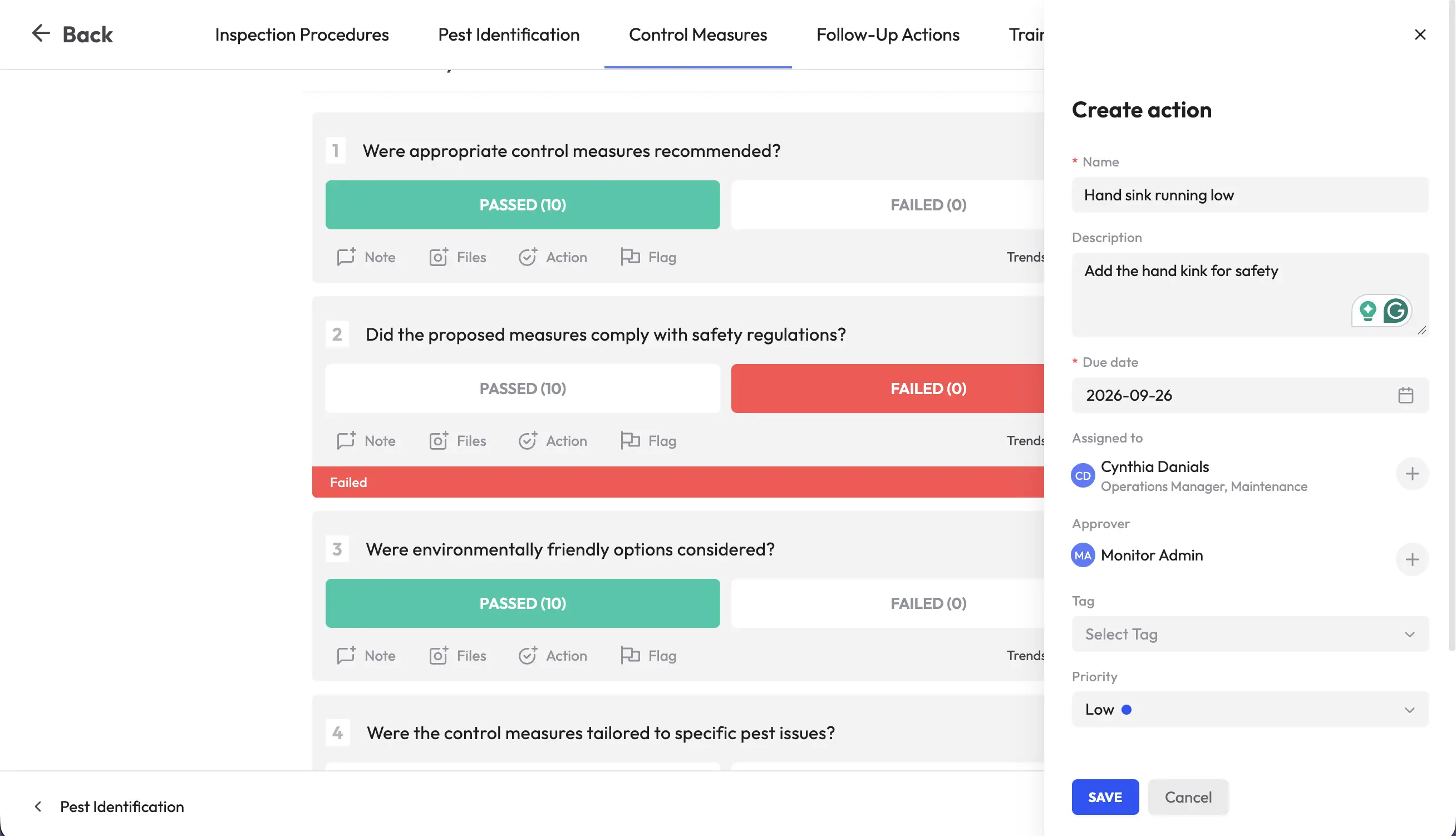
Corrective actions get tracked to actual closure. When the digital checklist flags an issue - a hand sink running low, a cooler trending warm - it can generate an assigned task with a deadline and it stays visibly open until someone verifies it's actually fixed. Nothing gets lost in a pre-shift conversation that nobody else heard.
Every location runs the same checklist, the same way. For multi-unit operators especially, this is the difference between inspection readiness being a matter of luck (which manager, which shift) and inspection readiness being consistent across every site, because the checklist itself enforces what gets checked and in what order.
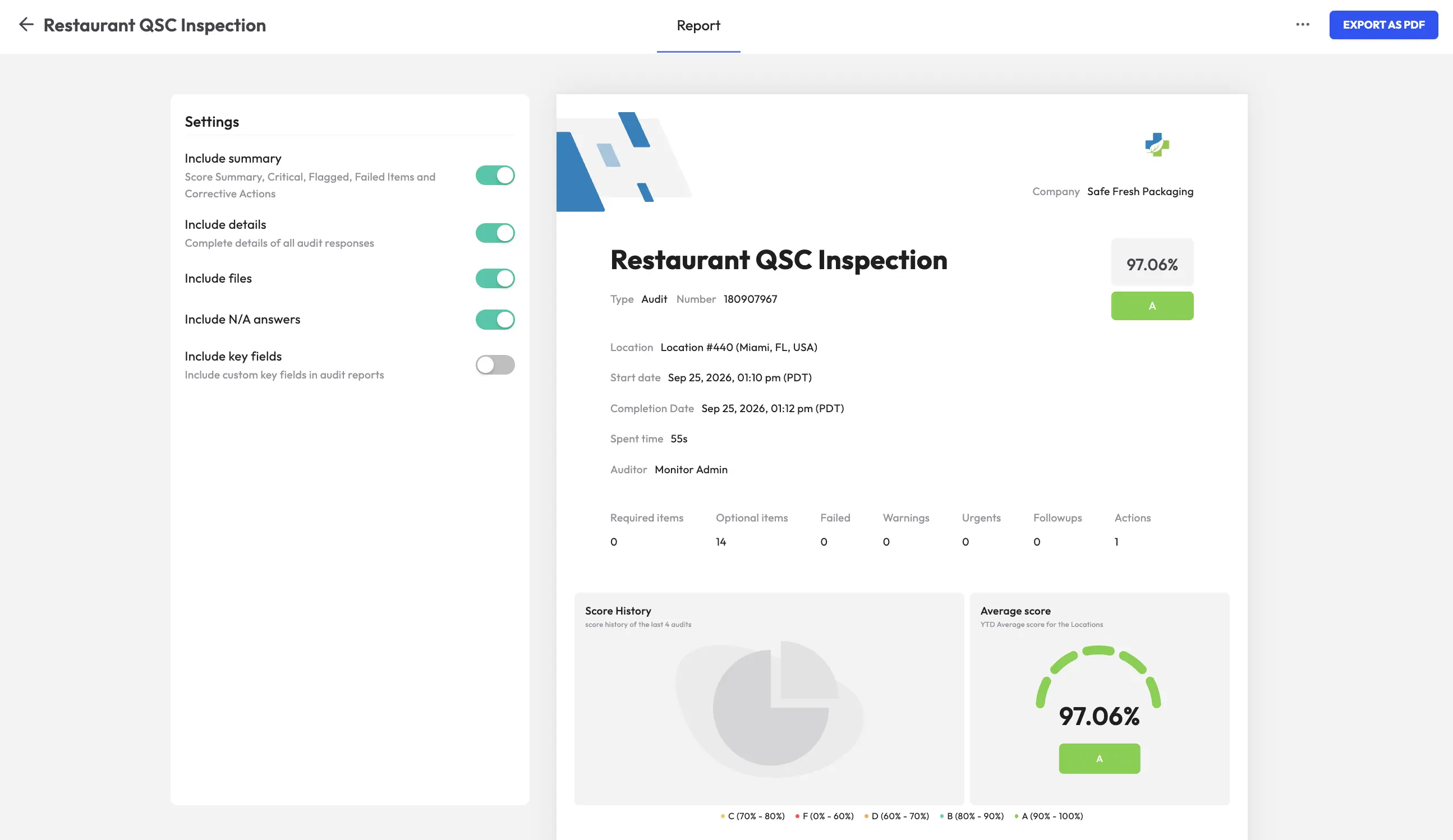
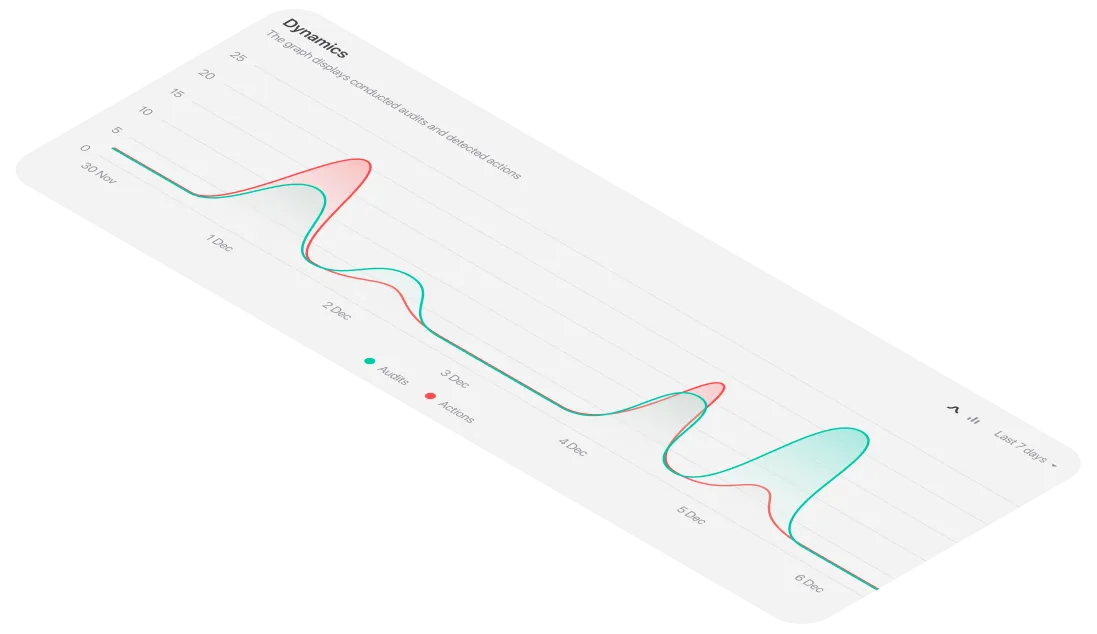
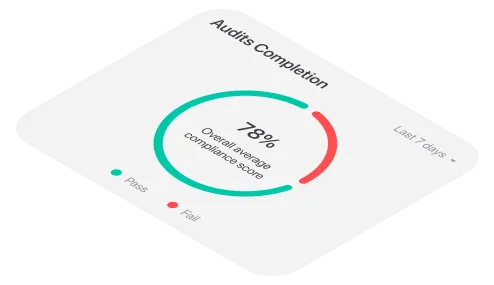
Managers get visibility before the inspector shows up. Instead of hoping the last few weeks went well, a manager can see completion rates, open corrective actions, and recurring problem areas across every location - the kind of pattern that's nearly invisible in a stack of paper forms but obvious the moment the data lives in one place.
This is exactly the shift platforms built for food safety software are designed to support and it's the specific gap monitorQA's restaurant inspection software is built to close: digital checklists that capture photo evidence and timestamps at the point of work, corrective actions that stay tracked until verified resolved and dashboards that give multi-location operators a real picture of inspection readiness across every site, not just the one someone happened to check this week.
Paper vs. digital: a direct comparison
What digital checklists don't fix
It's worth being direct about this: software doesn't replace training and it doesn't create a food safety culture where none exists. If staff don't understand why a temperature check matters, digitizing the checklist won't teach them that; it'll just produce a more accurate record of the gap. A digital checklist that requires a photo still needs someone willing to actually look at the walk-in, not just snap a picture of the door.
What digital checklists do fix is the structural failure - the parts of the process that depended entirely on nobody being rushed, tired or forgetful, ever. For a restaurant with strong food safety habits already, digitizing makes that discipline durable and provable. For one with real gaps, it makes those gaps visible early, on a Tuesday afternoon dashboard, rather than during a surprise inspection.
<<cta>>
Making the switch without disrupting service
The restaurants that transition smoothly tend to start small: digitize the highest-risk checklist first - usually temperature logs or opening/closing procedures - prove it works during a normal week, then expand from there. Trying to digitize every paper form in the building on day one tends to overwhelm staff and slow adoption; a phased rollout lets the team get comfortable with one workflow before adding the next.
If your restaurant operates across multiple locations, or if health code violations have shown up more than once for the same underlying issue, that's usually the clearest signal that the process, not the staff,needs to change. monitorQA's restaurant inspection software is built around exactly that transition: digital checklists tailored to food safety requirements, photo-backed documentation and corrective actions tracked from the moment an issue is flagged to the moment it's verified resolved - giving both single-location owners and multi-unit operators a clear, provable picture of inspection readiness instead of a hopeful guess.