

There's a specific kind of scramble that happens when an audit gets scheduled with 2 weeks' notice. Suddenly every location manager is digging through binders, texting each other about which checklist version is current, and quietly hoping the walk-in cooler at site 4 has been running the temperature logs it's supposed to. For a week or two, the whole organization performs compliance. Then the audit ends, and often so does the discipline.
This is the pattern worth naming directly: most multi-location operations aren't actually audit-ready. They're audit-preparable, which is a very different thing. Preparable means you can pull things together in time if you know it's coming. Ready means it wouldn't matter if the auditor showed up unannounced tomorrow, at any of your locations, because the records already reflect what's actually happening.
If you're trying to figure out how to keep multiple locations audit ready, not just for the scheduled visit but as a permanent operating state, the answer isn't more urgency before the deadline. It's fixing the specific structural gaps that make locations drift out of compliance in the first place. Here's what those gaps look like and what actually closes them.
Why multi-location operational compliance breaks down in the first place
A single well-run location can maintain strong operational compliance almost by force of habit: one manager, one team, one set of routines everyone reinforces daily. Multiply that by five, twenty or a hundred locations and the habit-based model stops working because it was never actually a system. It was one person's discipline and discipline doesn't scale by copy-paste.
<<cta>>
Checklists drift, even when everyone means well. A checklist written at headquarters gets photocopied, then re-photocopied, then quietly edited by a manager who thought a section didn't apply. Six months later, three locations are technically using the same checklist and none of them match. Nobody decided this should happen; it just accumulates.
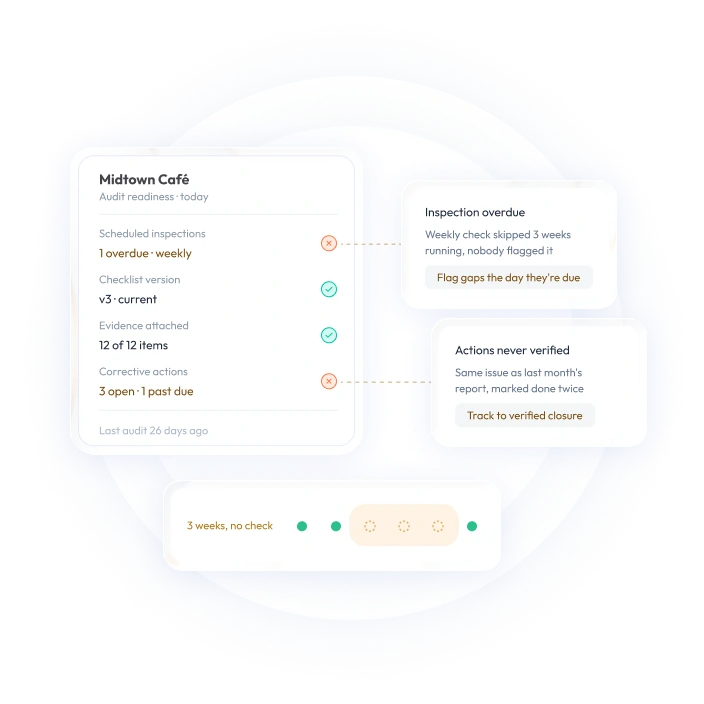
Inspections get missed without anyone noticing in real time. A weekly self-audit skipped once doesn't set off any alarm. Skipped 3 weeks running, at a location nobody's visited recently and it's invisible until an actual audit or an incident, brings it to light.
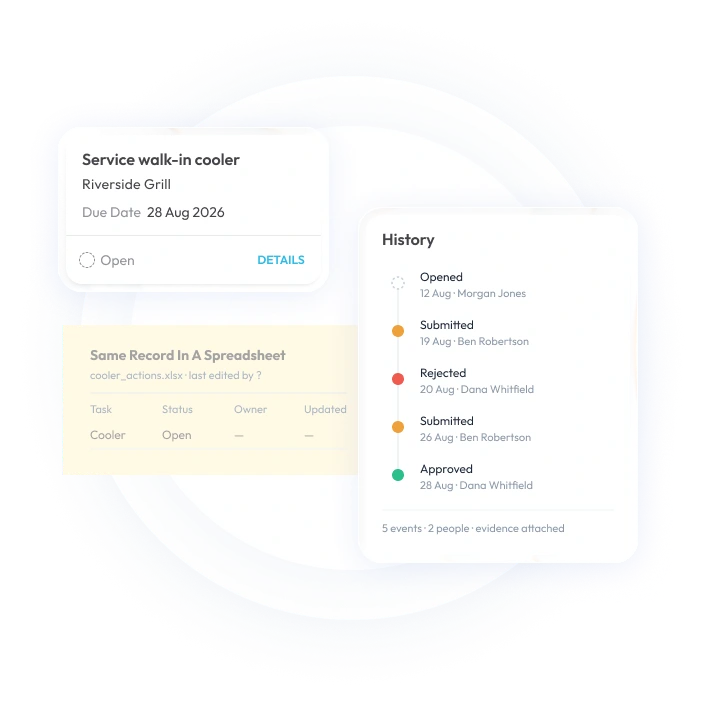
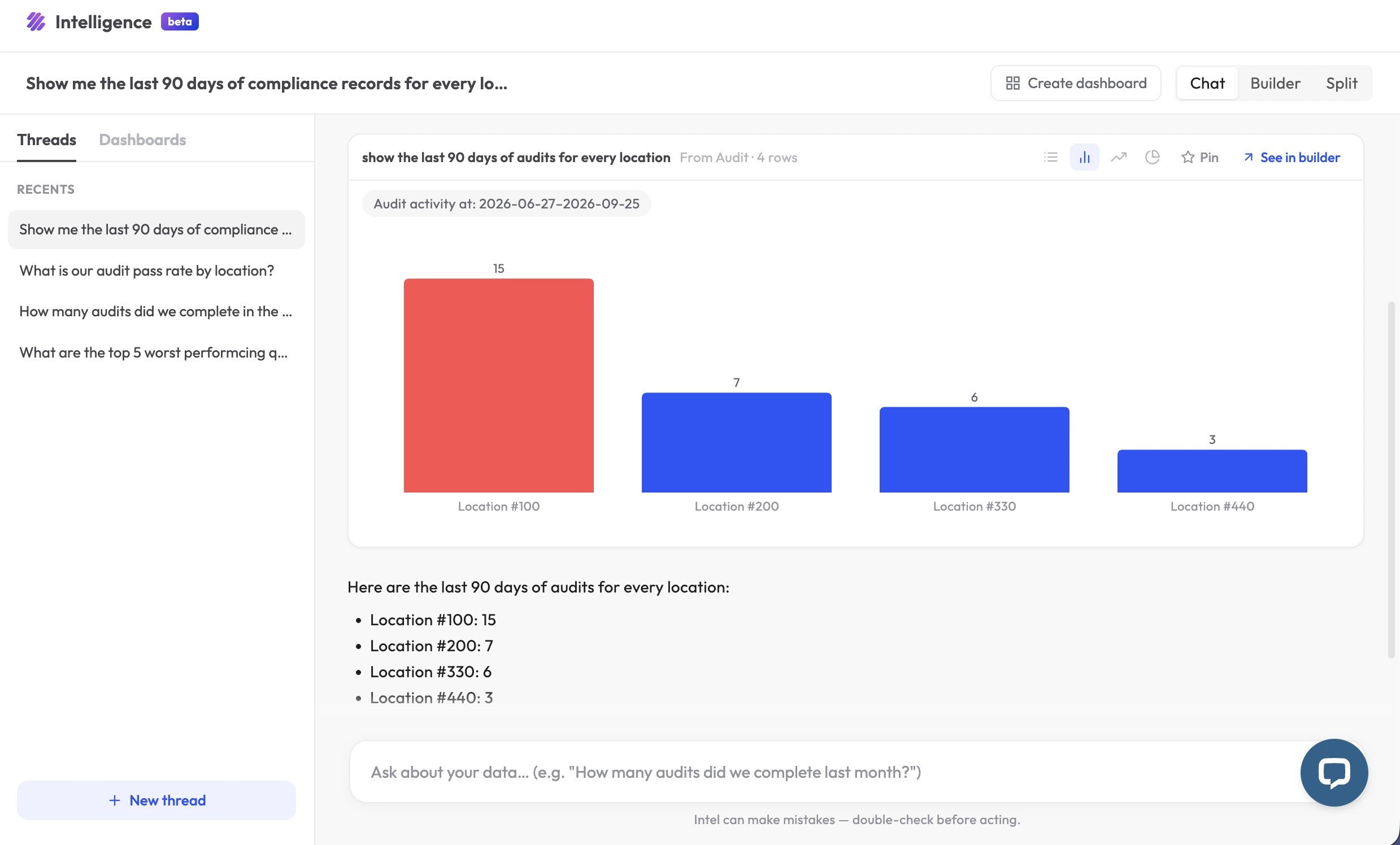
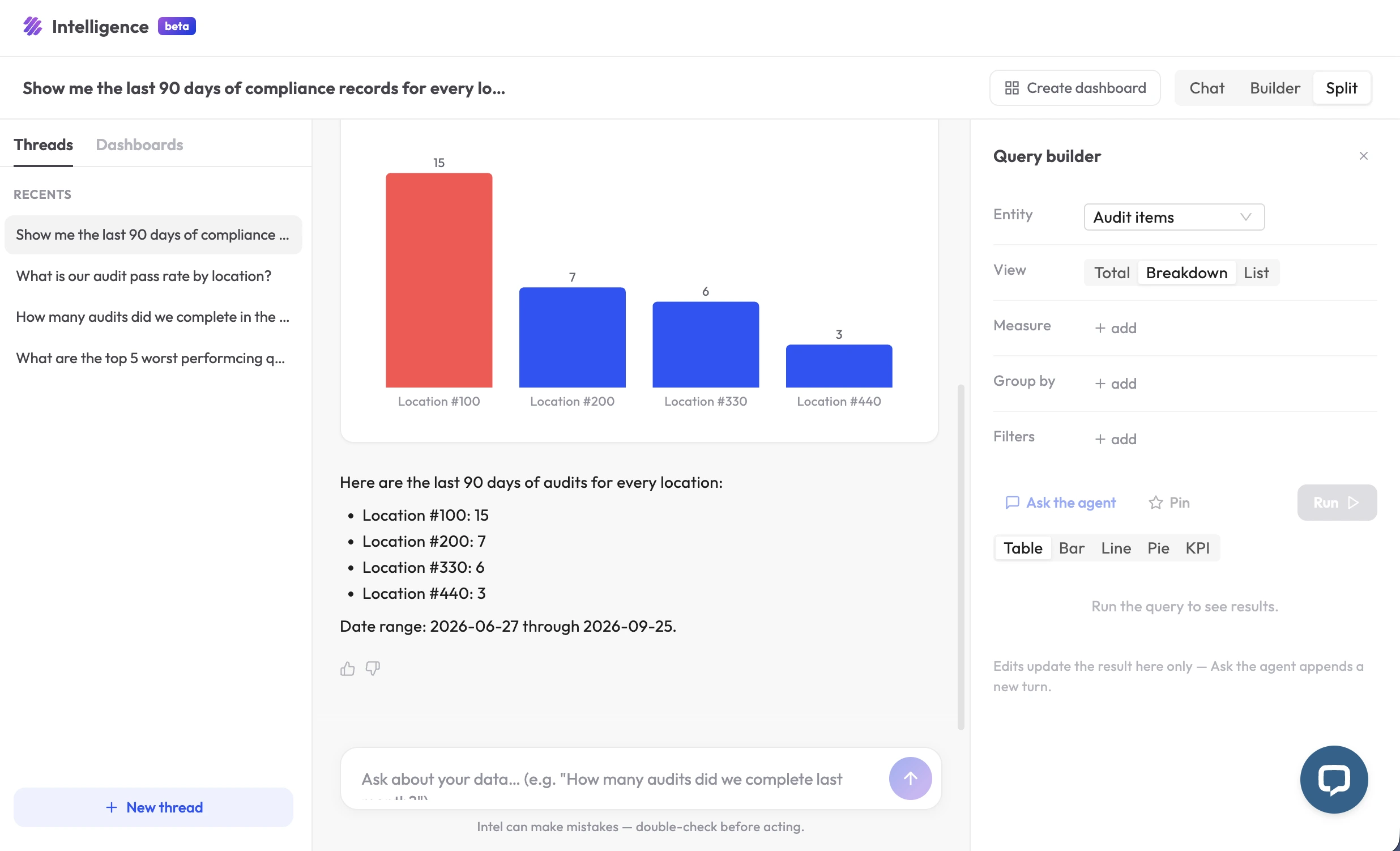
Records scatter across formats, folders,and physical locations. Paper at one site, a shared spreadsheet at another, photos texted to a manager's personal phone at a third. When someone at headquarters needs to answer ‘show me the last 90 days of compliance records for every location’, the honest answer is often ‘give us a few days’.
Visibility exists only at the individual site level. A regional manager might know their own 5 locations reasonably well. Almost nobody has a real-time, side-by-side view of every location's compliance status at once, which means problems compound quietly at the sites furthest from anyone's regular attention, until they surface all at once.
None of this is a discipline problem at any single location. It's what happens structurally once compliance depends on manual coordination across more sites than any one person can personally track.
The four failure points, one at a time
Inconsistent checklists across sites
When each location is technically free to interpret, adapt or informally update its own checklist, ‘standardized process’ becomes a phrase on a wall poster rather than something that's actually true. This matters more than it sounds, because during an audit, inconsistency itself is often the finding; not because any one location is doing something egregiously wrong but because the auditor can't verify that what's happening at site one is what's supposed to be happening everywhere.
What actually fixes this: a single source of truth for every checklist, held centrally and pushed out identically to every location, with updates propagating everywhere at once rather than requiring each site to manually adopt a new version. If a manager can't quietly tweak a checklist on their own, drift stops being possible by default.
Missed inspections that go unnoticed
The core issue isn't that inspections get missed; that will happen occasionally no matter what system you use. It's that missed inspections are invisible until someone goes looking and by the time someone's looking, it's usually because something already went wrong. A missed inspection that's flagged the same day is a minor correction. A missed inspection that's discovered 3 months later during an audit is a liability.
What actually fixes this: completion tracking that surfaces gaps immediately rather than retroactively - a dashboard that shows, today, which locations completed their scheduled inspection and which didn't so a regional manager can follow up before the gap becomes a pattern rather than after.
Scattered records with no central home
This is the failure point that turns audit prep into a research project. If your compliance records live across paper files, personal devices, regional spreadsheets and whatever each location's manager happens to prefer, there is no fast way to answer an auditor's question and ‘no fast way’ often reads to an auditor as ‘no reliable way’, which is a much bigger problem than a single missing document.
What actually fixes this: every inspection, checklist and corrective action captured directly into one centralized system at the point of work, with photos and timestamps attached automatically. Not transcribed later. Not consolidated before the audit. Captured once, correctly, the first time.
Limited visibility across the full portfolio
Even when individual locations are doing reasonably well, without a way to see all of them at once, leadership is flying on faith. You can't manage what you can't see and most multi-location operators genuinely cannot see their full compliance picture in real time - only in retrospect, after someone compiles a report.
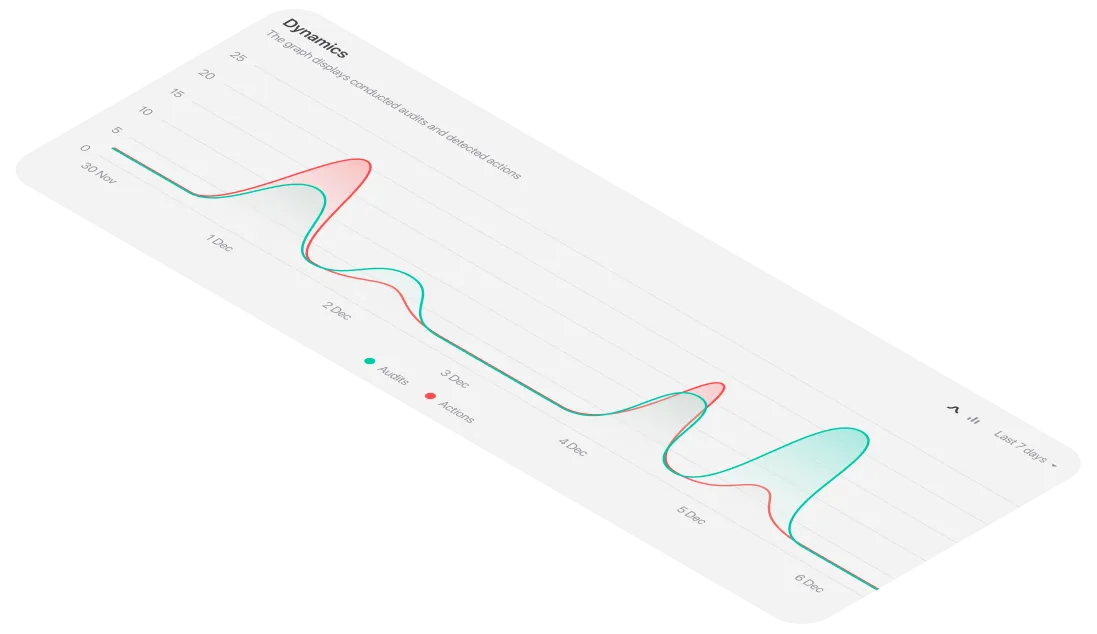
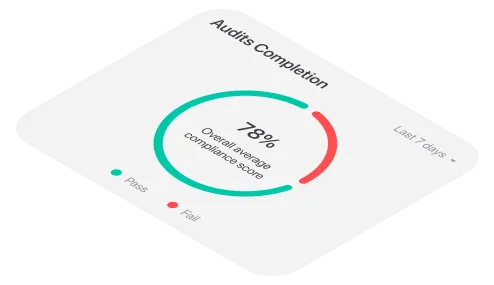
What actually fixes this: a live, cross-location dashboard, not a monthly summary someone builds manually, but a real-time view of completion rates, open corrective actions, and recurring issues across every site, filterable by location, region or issue type. This is what turns ‘we think we're mostly fine’ into ‘here's exactly where we stand, right now’.
<<cta>>
Practical ways to standardize without slowing teams down
Standardization sounds bureaucratic in theory and usually isn't, in practice, if it's built right. A few specific moves make the biggest difference:
Build checklists once, centrally, and lock them down. Location-level editing should be limited to what's genuinely site-specific, not core compliance items. If every site is working from an identical, current template, ‘was this the right version’ stops being a question anyone has to ask.
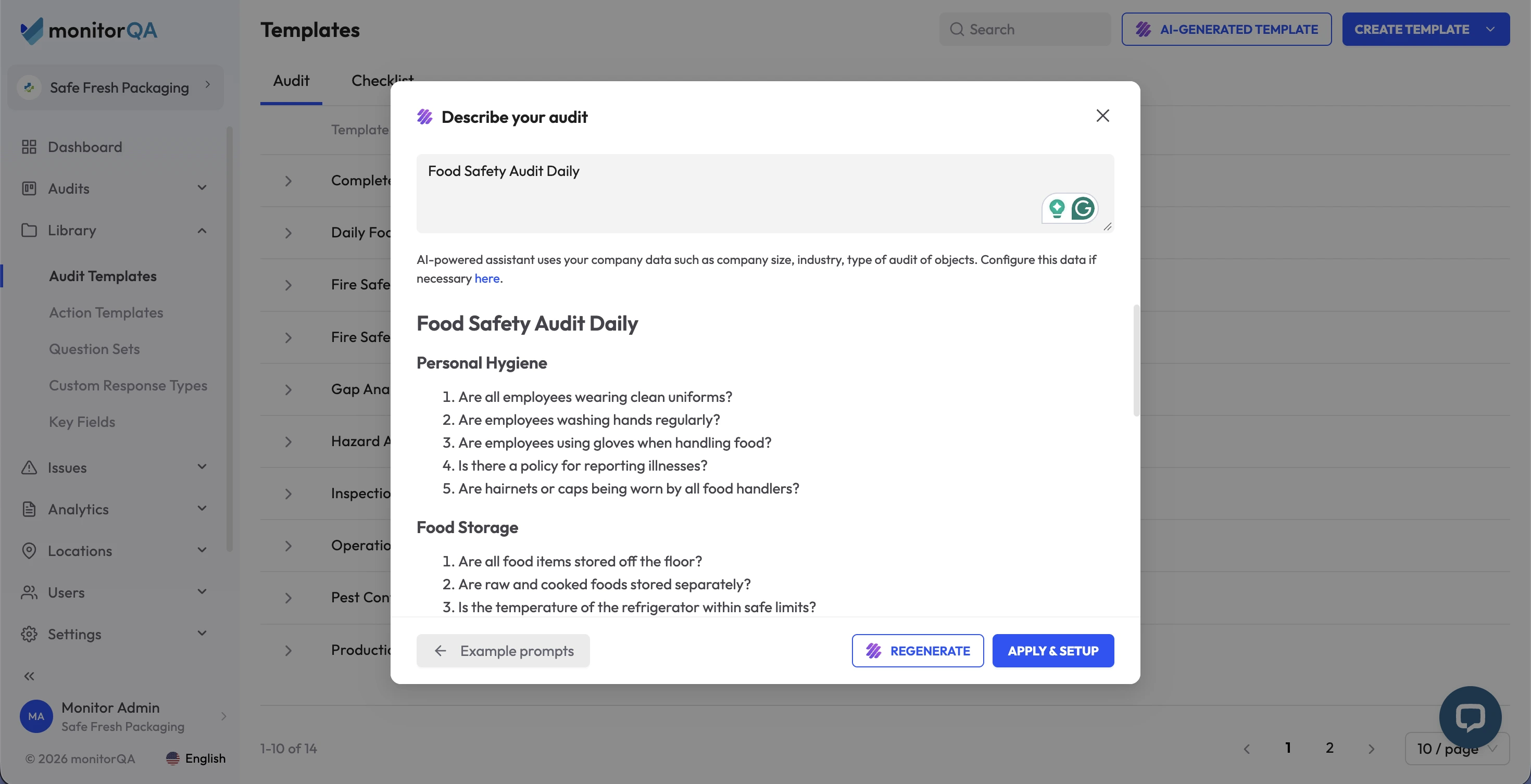
Make evidence part of the task, not an afterthought. A checklist item that requires a photo before it can be marked complete removes the ambiguity between ‘this happened’ and ‘someone said this happened’. That single design choice does more for audit defensibility than almost anything else on this list.
Set a cadence and make gaps visible immediately, not eventually. Weekly inspections that quietly slip to ‘whenever there's time’ are a slow leak. A system that flags an overdue inspection the day it's due, not the week someone finally notices, keeps small gaps from becoming patterns.
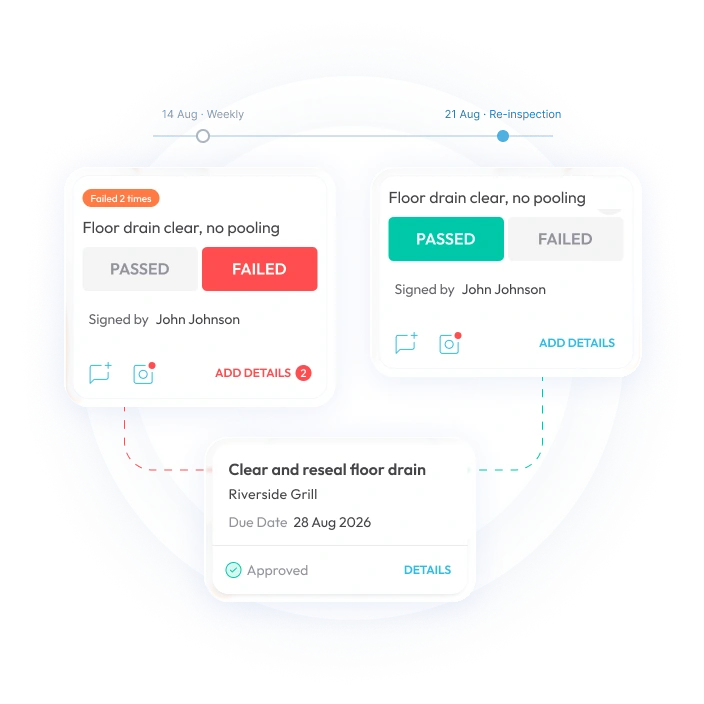
Route every finding into a tracked corrective action with an owner and a deadline. An issue noted but not assigned to someone, with a due date, tends to just sit there. Assigned, tracked and followed up until verified closed is the difference between a documented risk and a resolved one.
Review cross-location trends on a regular cadence, not just before an audit. If the same issue keeps showing up at multiple sites, that's not four unrelated problems; it's one systemic gap and it's far easier to see once data from every location lives in one place instead of 4 separate folders.
Addressing issues before the audit, not during it
The organizations that walk into audits calmly aren't the ones who scrambled successfully. They're the ones who never needed to scramble because the gaps were already caught and closed weeks or months earlier as part of normal operations rather than emergency prep.
That requires shifting the mental model from ‘get ready for the audit’ to ‘stay in a state an audit can't surprise’. Practically, that means running your own internal audits on the same cadence and rigor a real one would use, reviewing open corrective actions on a fixed schedule rather than only when someone remembers and treating a recurring finding at one location as an organization-wide signal worth investigating everywhere, not a one-off local issue.
This is where operational compliance stops being an event and becomes a continuous state and it's genuinely difficult to maintain that state manually once you're operating more than a handful of sites. Beyond a certain scale, the coordination overhead of doing this by spreadsheet and phone calls becomes its own operational risk.
<<cta>>
Where software fits in
None of the practices above require software in principle. A disciplined team with enough hours could run all of them manually. In practice, almost nobody has those spare hours and the manual version tends to degrade exactly when it matters most: during growth, during staff turnover, during the weeks nobody's paying close attention.
A platform built for this closes the structural gaps directly rather than asking people to compensate for them through sheer diligence. monitorQA is built around exactly this problem: centralized, locked checklists that stay consistent across every site, mobile inspections with photo and timestamp evidence captured at the point of work, corrective actions tracked automatically from finding to verified resolution and a live dashboard that shows completion rates and open issues across your entire portfolio in real time. Instead of discovering a compliance gap when an auditor finds it, you see it the day it appears at whichever location, however far from headquarters it happens to be.
The goal isn't a better audit-prep sprint. It's making the sprint unnecessary, because every location already reflects what your standards say it should.
A quick self-check
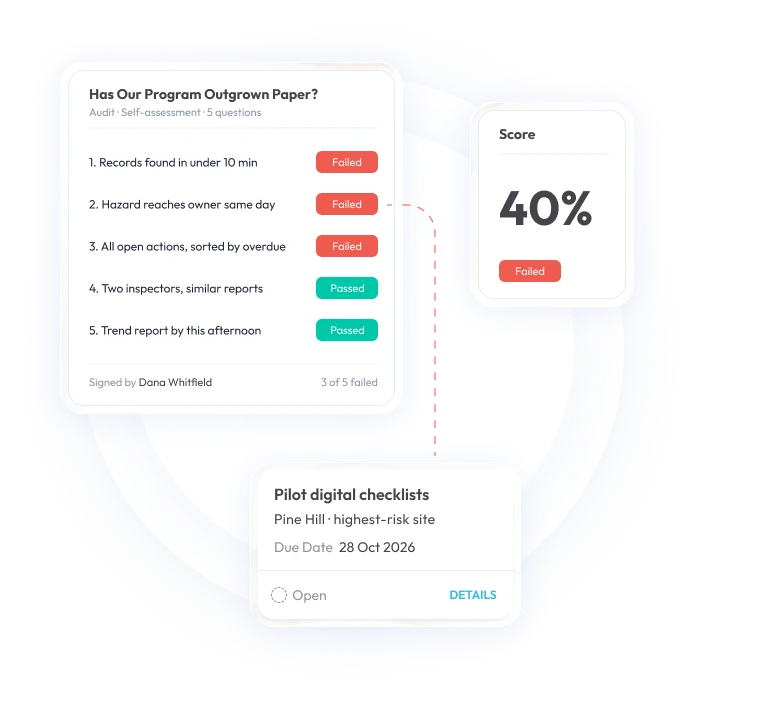
Before your next audit, scheduled or not, it's worth asking a few direct questions about where things actually stand:
- If an auditor arrived at your least-visited location tomorrow, unannounced, would the records there hold up the same as your flagship site?
- Do you know, right now, which locations have overdue inspections or open corrective actions, without having to call around and check?
- Is your checklist genuinely identical across every site or has it quietly diverged over time?
- Could you produce the last 90 days of compliance records for any location in minutes, not days?
If any of those gave you pause, that's not a discipline problem with your team; it's a signal that the process needs a structural fix, not more effort from people already doing their best with the tools they have.