It’s Thursday afternoon. One safety inspector has nine site inspections due by Friday and two of them are already overdue. The inspector covering the neighboring sites has two, both done.
Nobody planned it that way. A colleague was off sick for a week and their sites got handed over. Two projects started earlier than expected. A few inspections slipped from last month and were never moved. By the time anyone notices, the overdue count is a number in someone else’s report and the inspector is the one who has to explain it.
Most overdue audits aren’t a discipline problem. They’re a workload problem that nobody had the time to see coming.
Workload drifts on its own
Audit schedules are usually fair when they’re made. Then real life gets involved. People take leave, sites open and close, a failed inspection needs a re-check and the work quietly piles up on whoever happens to cover the busiest sites.
Fixing it by hand means opening the audit list, filtering by person, counting what’s pending and overdue, finding someone with room, checking they can actually see the site, reassigning the audit and passing on whatever the first inspector knew. That’s a lot of steps for a Thursday afternoon so it tends to wait until Monday. By then, two overdue audits had become four.
<<cta>>
Start with one question
With monitorQA connected to an assistant like Claude (the setup guide covers how), the full picture is one question away. Take a company with eight safety inspectors covering 30 sites:
“Who’s overloaded and what’s overdue? For each inspector, show audits completed in the last 30 days, audits pending and anything overdue.”
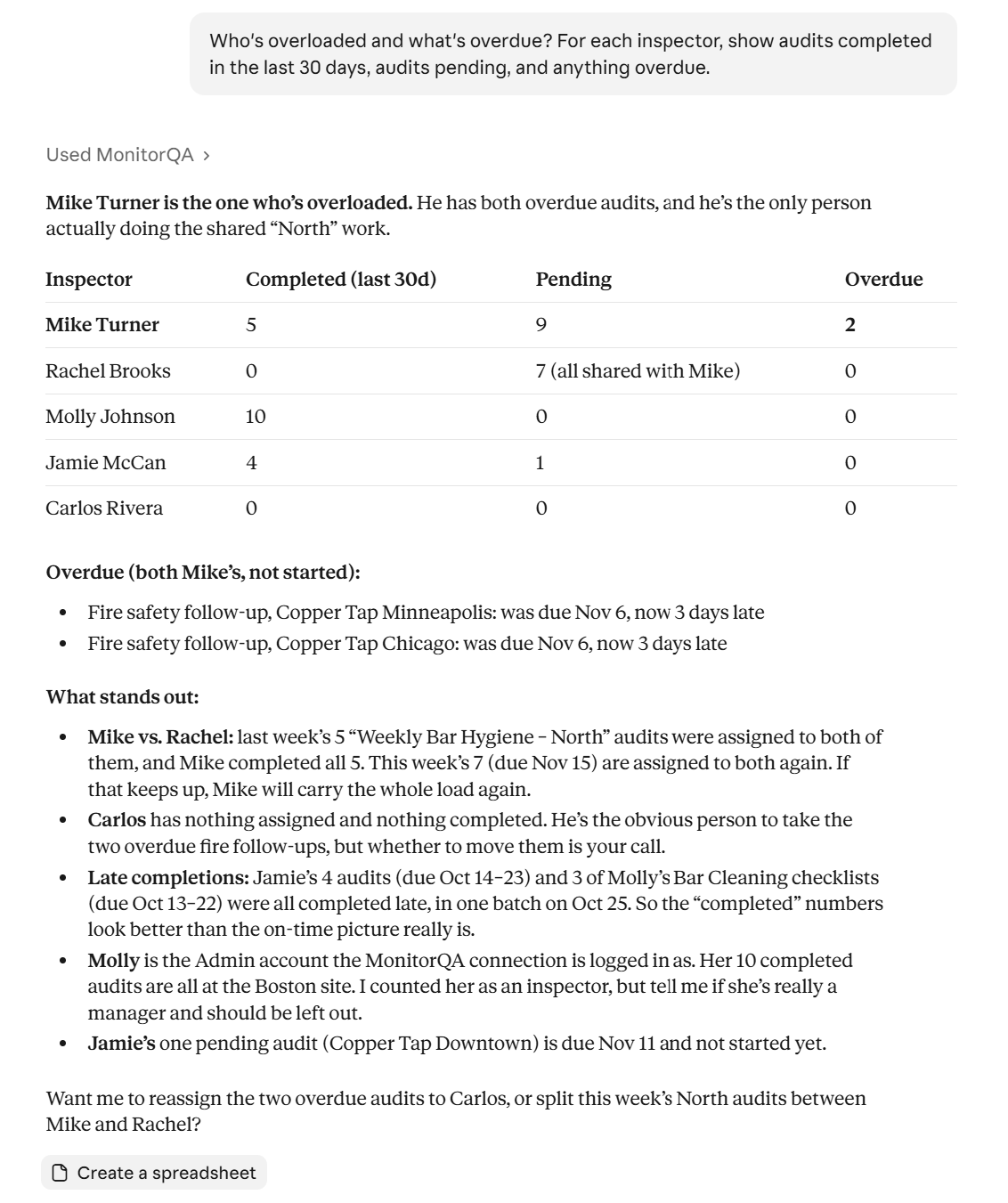
The table makes the problem obvious in a way the audit list never does. It also shows who has room, which is the other half of the answer.
Move the work, not just the name
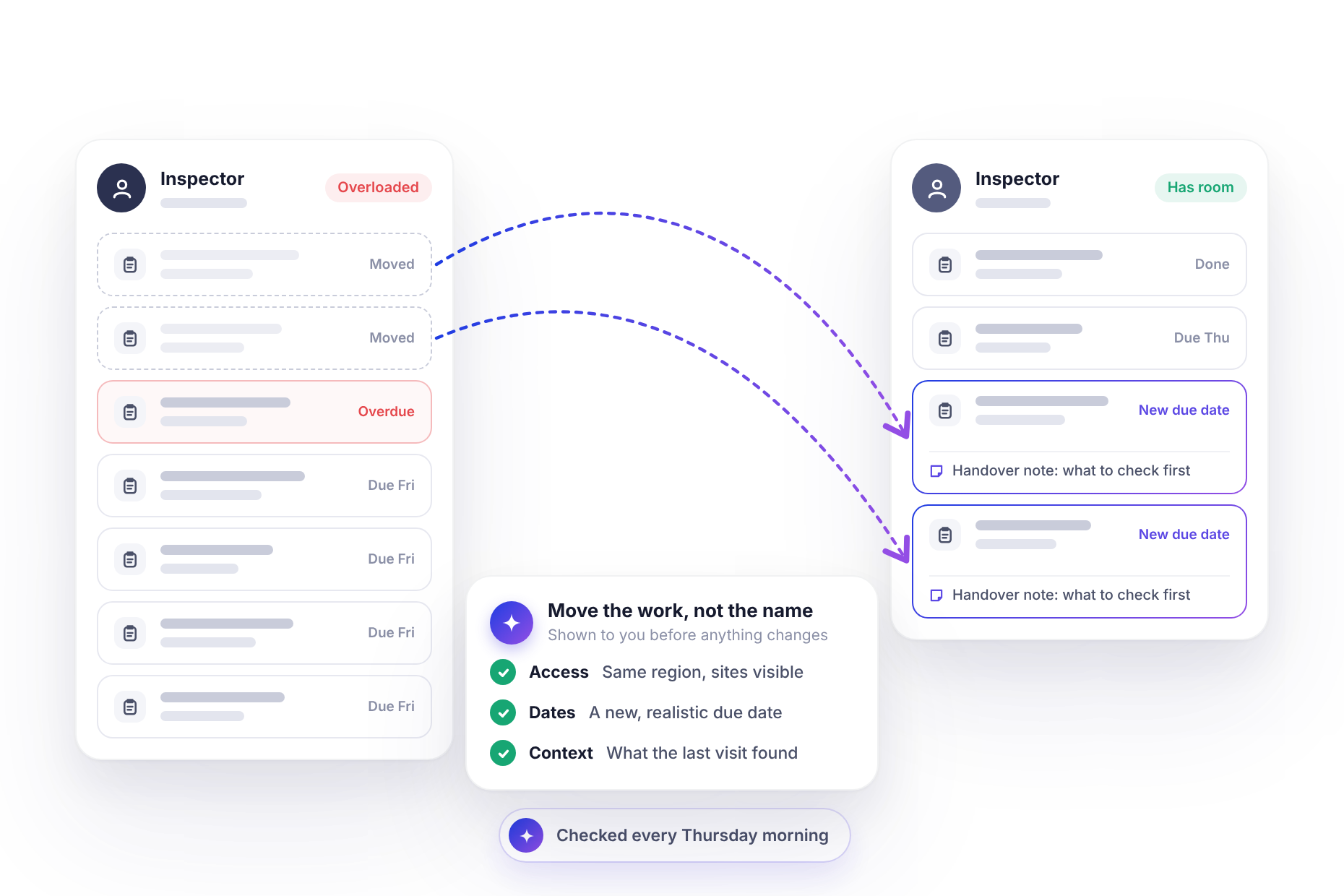
Reassigning an audit sounds like changing one field. In practice, it’s three things and missing any of them causes a new problem:
- Access. If the new inspector can’t see the site in monitorQA, the audit lands on their list and they can’t open it. The simplest way to avoid this is to move work within a region, where everyone already has access to the region’s sites. If someone from outside has to step in, add them to that region first (50 sites live in an afternoon covers how regions and access work).
- Dates. An audit that was due last Tuesday needs a new, realistic due date or it shows up as overdue on the new inspector’s record from day one.
- Context. The first inspector may know things the second one doesn’t: the scaffolding that failed last time, the site manager who’s only there in the mornings.
The assistant handles the dates and the context in the same request and picks the inspector for you:
“Move the overdue inspections to whoever in the same region has the fewest pending audits. Set the due date to next Wednesday and add a note explaining why it was moved and what the last inspection at each site found. Show me before you change anything.”
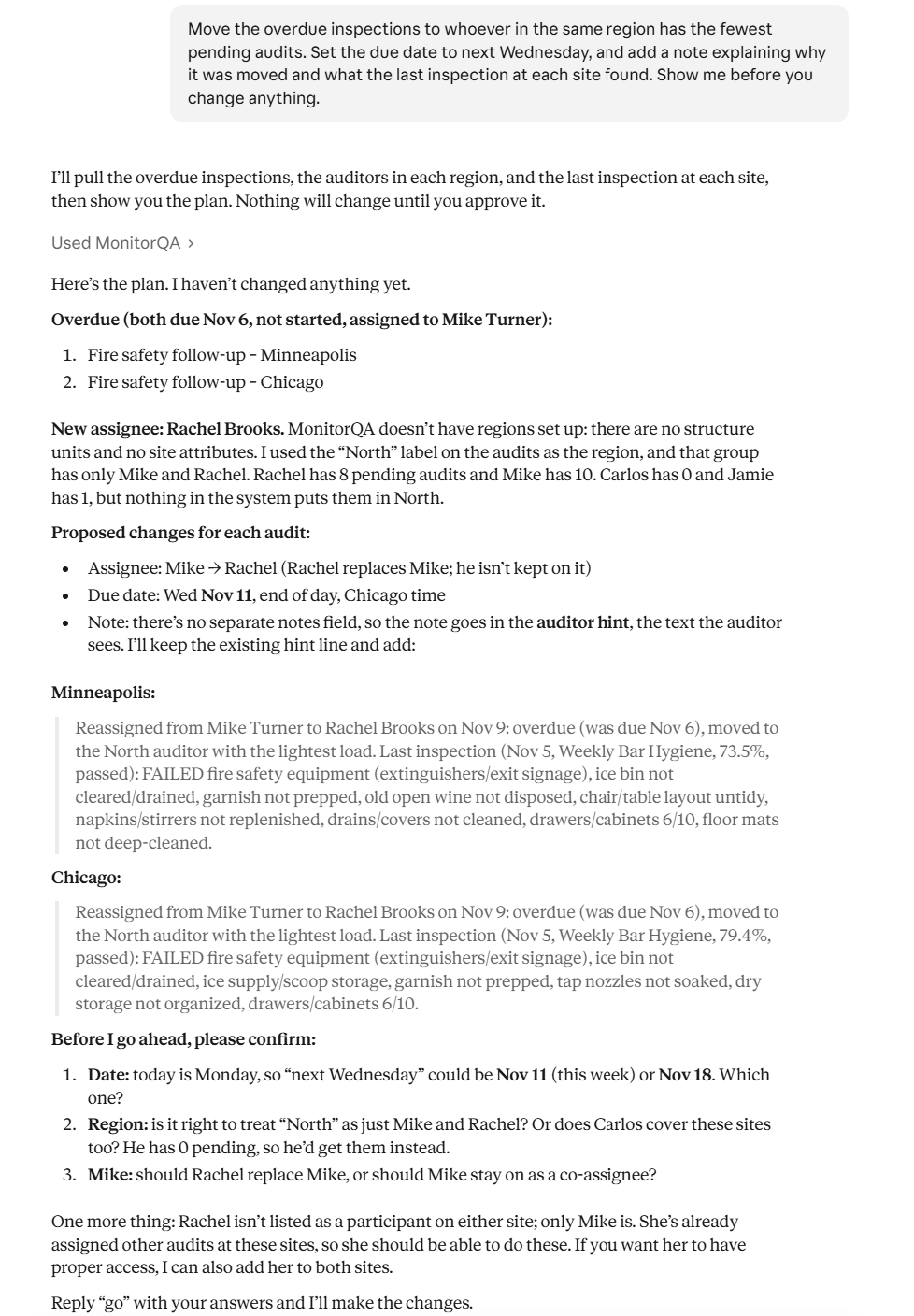
The questions at the end are worth a second. “Next Wednesday” can mean two different dates. Should the original inspector stay on the audit as well or come off it? A good preview asks instead of guessing and it costs you one reply.
One limit to know about: audits created by a recurring schedule can’t be moved by the assistant. It moves one-off audits, such as follow-ups and extra visits, and tells you which scheduled ones need moving in monitorQA itself.
<<cta>>
Keep the context with the audit
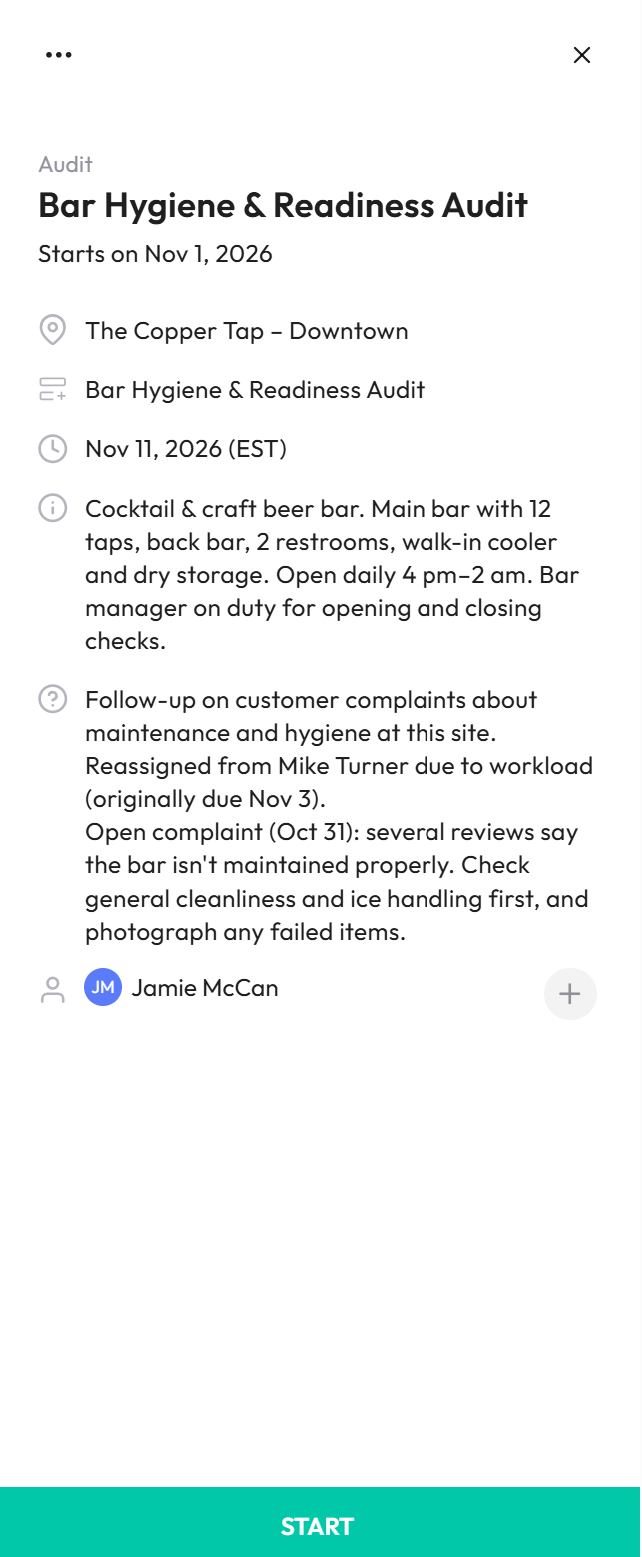
The note is the part that’s easiest to skip and most expensive to lose. An inspector who picks up someone else’s site without any background will spend the first half hour on things that were fine last time, and may miss the one thing that wasn’t.
Because the note sits on the audit itself, the new inspector sees it in the mobile app before they start. The assistant adds the handover below any instructions that were already there so nothing the original planner wrote gets lost.
Balance ahead, not just behind
Catching up on overdue work is useful. Not falling behind in the first place is better. The same question works looking forward:
“Look at audits due in the next two weeks in each region. If anyone has more than twice the average for their region, suggest which audits to move and to whom.”
Keeping suggestions within a region matters for a practical reason: the assistant doesn’t know where sites are on a map or how long it takes to drive between them. Grouping sites and inspectors by region keeps reassignments sensible. If your regions are large, smaller units make the suggestions tighter.
If your assistant supports scheduled tasks, this check can run every Thursday morning and land before the problem does (Stop checking dashboards covers how).
Two related clean-ups
Audits that should have been closed months ago. Every audit program collects a few: inspections for a site that finished early or ones that were overtaken by a later visit. They sit on someone’s list as overdue and drag down completion rates. Ask the assistant to list anything overdue by more than 30 days, decide which still matters and have it reassign those and expire the rest.
When someone leaves. An inspector moving on leaves behind regions, access and pending audits. Rather than moving them one by one, you can ask the assistant to hand the lot to their successor in one step.
<<cta>>
What it doesn’t know unless you say
The assistant only sees what’s in monitorQA. A few things that matter for workload aren’t there, so include them in your request:
- Leave and absence. “Anna is on leave next week, don’t assign anything to her.”
- Skills and certifications. “Only Tom and Lewis are qualified for fire safety inspections.”
- Preferences you care about. “Keep each site with the same inspector where possible.”
And as with every change, ask it to show you the plan first. Moving an audit is easy to undo; finding out on Friday that it went to the wrong person is less fun.
Check before the week ends, not after
Overdue audits are cheapest to fix on the day before they become overdue. Pick a fixed point in the week, Thursday morning works well for many teams, ask who’s overloaded and move what needs moving.
It takes a few minutes. The alternative is a Monday report full of red, and a conversation with an inspector who already knew they couldn’t get it all done.